Baptism in the Bible: A Call to Obedience and Public Faith
Baptism is one of the two ordinances Jesus commanded for His followers to observe. The Bible presents it as a powerful public declaration of personal faith in Christ — not a saving act, but an act of obedience that pictures the believer’s union with Jesus in death, burial, and resurrection.
This post explores baptism in the Bible, the meaning of the word, key Bible passages, and why infant baptism (as practiced in the Catholic Church) does not align with Scripture.
What Does the Bible Say About Baptism? Definition and Meaning
The English word “baptism” comes from the Greek baptizō (βαπτίζω), which means to immerse, submerge, or dip completely (to dunk). In the New Testament context, it refers to a complete immersion in water as a ceremonial act.
“Go and make disciples of all nations, baptizing them in the name of the Father and of the Son and of the Holy Spirit”
Other key passages:
Acts 2:38: “Peter said to them, ‘Repent and be baptized, every one of you, in the name of Jesus Christ for the forgiveness of sins, and you will receive the gift of the Holy Spirit.’”
Romans 6:3-4: “Or don’t you know that all of us who were baptized into Christ Jesus were baptized into his death? We were buried therefore with him through baptism into death, that just as Christ was raised from the dead through the glory of the Father, so we also might walk in newness of life.”
Mark 16:16: “He who believes and is baptized will be saved; but he who disbelieves will be condemned.” (Belief precedes baptism.)
Baptism follows personal repentance and faith in Jesus Christ. It symbolizes dying to sin, being buried with Christ, and rising to new life. It is believer's baptism — for those who have personally trusted in Christ — not a sacrament that imparts grace or removes original sin. It is not a means of salvation or regeneration but an outward sign of an inward reality.
Examples in Acts show new believers confessing faith before immersion: the Ethiopian eunuch (Acts 8), the Philippian jailer (Acts 16), and others. Jesus Himself was baptized as an adult to “fulfill all righteousness” (Matthew 3:13-17), modeling obedience.
Why Believer's Baptism by Immersion Is the Biblical Pattern
John MacArthur of Grace to You teaches clearly: New Testament baptism is for those who have personally trusted Christ. It does not save — the thief on the cross was never baptized yet entered paradise (Luke 23:39-43). Salvation is by grace through faith alone (Ephesians 2:8-9).
Baptism publicly testifies to the inward reality of new life in Christ.
Why Infant Baptism in the Catholic Church Does Not Align with the Bible
The practice of baptizing infants — common in the Roman Catholic Church, where it is often by sprinkling and viewed as removing original sin and conferring grace — has no direct command, example, or description in Scripture. Scripture consistently links baptism to personal repentance, belief, and confession, none of which infants can exercise.
John MacArthur outlines key reasons why this practice diverges from the Bible:
Infant baptism is not found in Scripture — “Scripture nowhere advocates or records any such thing as the baptism of an infant.” No mandate, no incident.
It contradicts the requirement of personal faith — Infants cannot repent, believe, or confess Christ. Every New Testament baptism assumes prior saving faith.
Household baptisms do not prove infant baptism — Contexts show belief preceded baptism; the text never specifies infants.
Baptism is for professing believers by immersion as a symbol, not a means, of salvation.
A Clear Call to Biblical Obedience
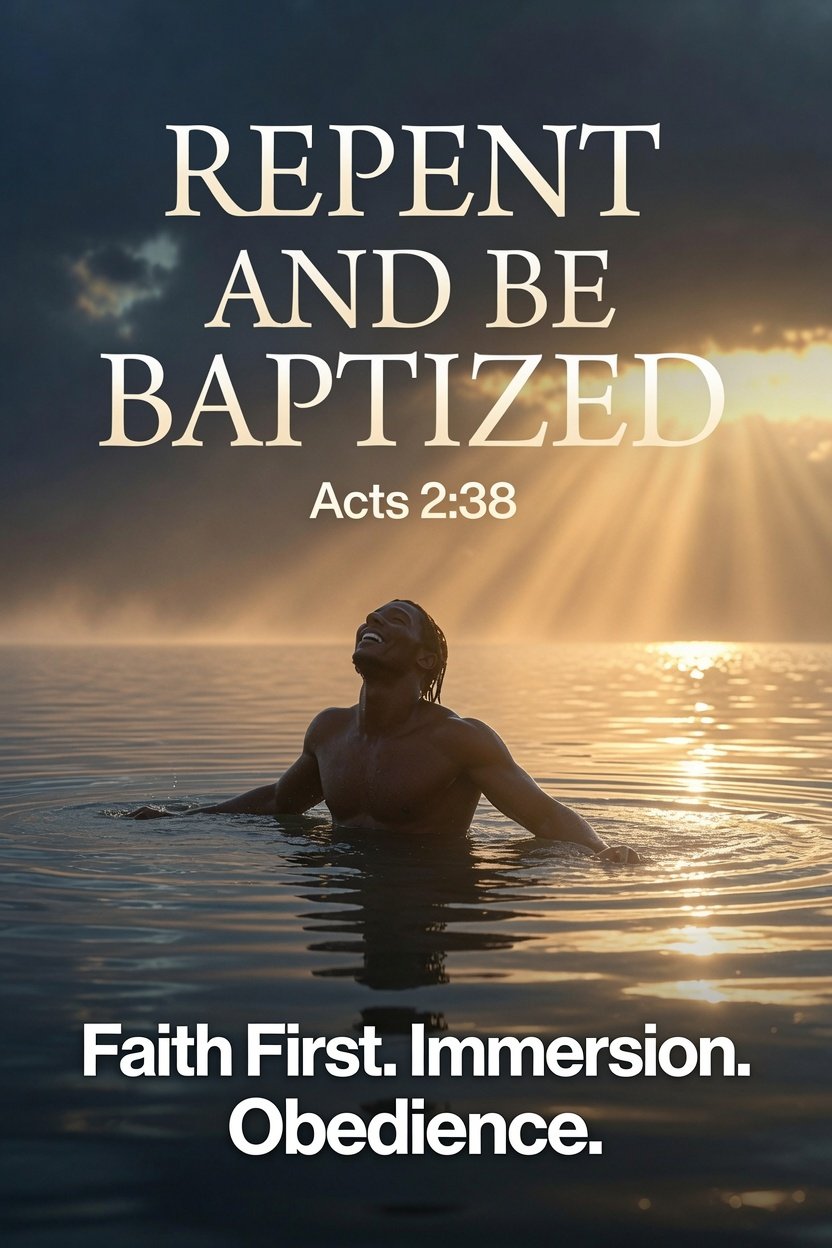
Faith First!
Baptism matters because obedience to Christ matters. May we honor Him by doing what He said. It is a beautiful, obedient testimony to the world of your new life in Him.
If you have placed your faith in Jesus Christ but were only baptized as an infant (or not baptized), consider following the New Testament pattern. It is a joyful step of discipleship and public witness.
Ready to take this step? Find a Bible-teaching church that practices believer's baptism by immersion. Study the Scriptures for yourself and obey what you see.