Fasting in the Bible: Rediscovering an Ancient Practice
In our modern world of ultra-processed foods, endless snacking, sedentary desk jobs, and 24/7 digital stimulation, chronic diseases are surging. Obesity, diabetes, inflammation, fatigue, brain fog, and metabolic disorders have become commonplace. We live in an age of unprecedented abundance — yet many feel physically drained, mentally scattered, and spiritually disconnected. Convenience has replaced discipline, and constant consumption has crowded out reflection.
In the midst of this lifestyle epidemic, an ancient biblical practice offers profound wisdom and hope: fasting. Long before intermittent fasting became a wellness trend, Scripture presented it as a powerful, intentional discipline for drawing closer to God, seeking guidance, and restoring wholeness in body, mind, and spirit.
Purposes and Power According to Scripture
Scripture links fasting to several important spiritual outcomes:
Deepened prayer and seeking God’s guidance (Ezra 8:21-23; Acts 13:2-3)
Humility, repentance, and turning from self-reliance (Joel 2:12-13; Nehemiah 9:1)
Clarity amid trials or important decisions
Preparation for significant work or seasons (Matthew 4:1-2)
Fasting is never presented as a way to earn God’s favor, but as a response to His grace.
True Fasting vs. Empty Ritual – Isaiah 58
One of the most powerful passages on fasting is Isaiah 58. God rejects empty ritual, self-focused fasting and declares what He truly desires: justice and compassion — loosing bonds of wickedness, feeding the hungry, and caring for the oppressed (Isaiah 58:6-7). When done with the right heart, it brings God’s blessing: light, healing, guidance, answered prayer, and renewed strength (Isaiah 58:8-11)
“6 Isn’t this the fast that I have chosen:
to release the bonds of wickedness,
to undo the straps of the yoke,
to let the oppressed go free,
and that you break every yoke?
7 Isn’t it to distribute your bread to the hungry,
and that you bring the poor who are cast out to your house?
When you see the naked,
that you cover him;
and that you not hide yourself from your own flesh?”
Here, justice means fighting oppression and setting people free from what crushes them. Compassion means practical care — feeding the hungry, housing the homeless, clothing the naked, and not ignoring the needs of others.
When fasting is paired with this kind of heart, God promises beautiful blessings:
“8 Then your light will break out as the morning,
and your healing will appear quickly;
then your righteousness shall go before you,
and Yahweh’s glory will be your rear guard.
9 Then you will call, and Yahweh will answer.
You will cry for help, and he will say, ‘Here I am.’
’If you take away from among you the yoke,
finger pointing,
and speaking wickedly’”
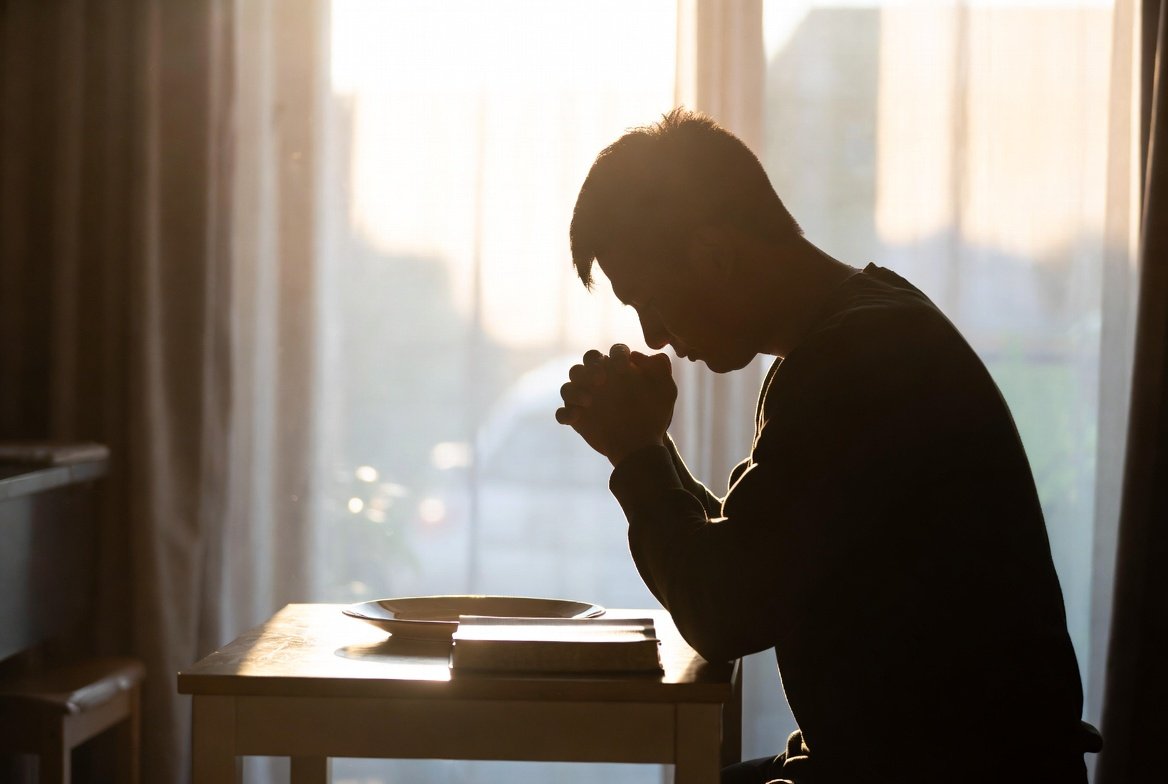
Fasting…
It is never presented as a way to earn favor but as a response to grace.
Respected teachers unpack this further:
John Piper presents fasting as awakening hunger for God and making room for greater satisfaction in Him.
John MacArthur highlights its role in expressing urgent dependence during distressing or pivotal times.
Martin Luther advocated fasting to subdue the body for better service in prayer and daily faithfulness, grounded in grace rather than merit.
R.C. Sproul viewed it as longing for a fuller experience of God’s power and presence.
What Does the Bible Say About Fasting?
Biblical fasting is the voluntary abstinence from food for spiritual purposes. It is not mandatory. Unlike the single commanded fast under the Old Covenant (the Day of Atonement in Leviticus 16), the New Testament does not require it as a rule. Instead, Scripture presents fasting as a valuable, voluntary discipline.
Jesus assumed His followers would practice it and taught them how to do so sincerely:
“‘Moreover when you fast, don’t be like the hypocrites, with sad faces. Forthey disfigure their faces that they may be seen by men to be fasting. Most certainly I tell you, they have received their reward. But you, when you fast, anoint your head and wash your face, so that you are not seen by men to be fasting, but by your Father who is in secret; and your Father, who sees in secret, will reward you.’” (Matthew 6:16-18)
When asked why His disciples were not fasting at that time, Jesus explained they would fast after He was taken away:
“Jesus said to them, ‘Can the friends of the bridegroom mourn as long asthe bridegroom is with them? But the days will come when the bridegroom will be taken away from them, and then they will fast.’” (Matthew 9:15)
Key Examples from the Bible:
Jesus fasted 40 days and nights before His public ministry. “Then Jesus was led up by the Spirit into the wilderness to be tempted by the devil. When he had fasted forty days and forty nights, he was hungry afterward.” (Matthew 4:1-2).
Moses fasted 40 days on Mount Sinai while receiving the Law (Exodus 34:28).
Esther and the Jews fasted for three days before she approached the king (Esther 4:16).
Daniel fasted while seeking understanding and confessing sin (Daniel 9:3; 10:2-3).
Nehemiah fasted and mourned over Jerusalem’s condition (Nehemiah 1:4).
David fasted while pleading for his child’s life (2 Samuel 12:16-23).
The early church fasted and prayed before commissioning missionaries and appointing leaders (Acts 13:2-3; 14:23).
Healing & Deliverance: Jesus explained that some spiritual battles require prayer and fasting. When the disciples failed to cast out a demon, He said, “‘But this kind doesn’t go out except by prayer and fasting.’” (Matthew 17:21).
Scientific Research Echoing Ancient Wisdom
Emerging studies add modern credibility to the practice modeled in Scripture. Research on intermittent fasting and prolonged water-only fasting shows potential benefits such as weight loss, improved blood sugar control, reduced insulin resistance, lower blood pressure, decreased oxidative stress and inflammation, and activation of autophagy (cellular cleanup and regeneration).
Dr. Jason Fung, a leading expert on therapeutic fasting, has shown how intermittent and extended fasting can significantly improve insulin sensitivity and help reverse type 2 diabetes in many patients and even offer benefits for brain conditions such as Alzheimer’s. Watch his overview here: “Intermittent Fasting Benefits Alzheimer’s by Dr. Jason Fung“
Physician and researcher Dr. William Li highlights how time-restricted eating and intermittent fasting help regulate insulin levels, enabling the body to burn stored fat more efficiently and supporting metabolic health — particularly relevant for those facing diabetes-related challenges. Watch his practical overview here: “Fastest Protocol to Burn Visceral Fat”.
Metabolic scientist Professor Ben Bikman, a leading expert on insulin resistance, emphasizes that lowering insulin through strategies like structured fasting (fewer, well-spaced meals and fasting windows) can help reverse insulin resistance, often rapidly when combined with dietary focus on controlling carbohydrates. A helpful interview: “Dr. Ben Bickman on Reversing Insulin Resistance FAST”.
Harvard researchers have noted improvements in cardiometabolic markers (see Peterson et al., Time-Restricted Eating, 2018), while reviews in journals like PMC and studies from institutions such as Johns Hopkins highlight benefits for heart health, brain function, and cellular repair — effects that align with the rest and realignment fasting can provide.
These findings complement rather than replace the Bible’s primary spiritual emphasis: fasting as a means of drawing nearer to God.

How Biblical Fasting Addresses Today’s Challenges
Our era of hyper-processed foods and nonstop consumption contributes to widespread disease and disconnection. Biblical fasting counters modern excess by promoting physical rest for the digestive system, building discipline against impulsive habits, creating margin for reflection, and fostering gratitude and dependence in a self-sufficient culture.
It echoes the principle: “But he answered, ‘It is written, ‘Man shall not live by bread alone, but byevery word that proceeds out of God’s mouth.’’” (Matthew 4:4). In a time of chronic lifestyle-related illnesses, this ancient practice offers a pathway to greater wholeness — body, mind, and spirit.
Rediscovering This Forgotten Practice
What the Bible teaches about fasting is not outdated legalism but relevant wisdom for our processed-food, high-stress world. It invites us to step away from constant consumption and rediscover dependence, clarity, and deeper purpose.
Fasting in the Bible points us back to what truly sustains: God Himself. In a full world, making space through this discipline may be one of the most countercultural — and refreshing — steps you can take.
Additional Resources
Dr. Jason Fung(Leading expert on therapeutic fasting, diabetes reversal, and metabolic health)
”Fasting, Muscle Loss and Protein Needs - the facts“ — Dr. Jason Fung addresses one of the most common concerns about fasting: muscle loss. He explains the relationship between fasting, protein intake, and muscle preservation, providing practical facts and guidelines for safe, effective fasting without losing muscle mass.
“Can Fasting Help Reverse Kidney Disease | Chronic Kidney Disease“ — Dr. Jason Fung explores whether fasting can help reverse or improve chronic kidney disease, discussing the mechanisms, potential benefits, and practical considerations for kidney health.
“Intermittent Fasting for Type 2 Diabetes (Step by Step)“ — A practical step-by-step guide on using intermittent fasting to manage and potentially reverse Type 2 Diabetes.
Dr. William Li (Focus: Intermittent Fasting, Insulin Regulation, Fat Burning, Metabolic Health & Diabetes Support)
“The Best Fasting Window for Weight Loss Explained” (Dr. Li’s own site/video content) – Practical explanation of fasting windows, insulin, and metabolism.
https://drwilliamli.com/the-best-fasting-window-for-weight-loss/“How Fasting Can Transform Your Relationship with Food” (YouTube interview) – Broader benefits and easy implementation.
https://www.youtube.com/watch?v=fsPnsr3v7R4
Professor Ben Bikman (Focus: Insulin Resistance, Reversing It with Diet/Fasting, Metabolic Health)
“Dr. Ben Bikman: How To Reverse Insulin Resistance Through Diet, Exercise, & Sleep”(FoundMyFitness / Rhonda Patrick interview – excellent deep dive, ~3 hours). Highly recommended.
https://www.youtube.com/watch?v=gMyosH19G24“97: ‘Fast’ vs. ‘Slow’ Insulin Resistance” (Bikman lecture on types of insulin resistance and reversal strategies, including fasting).
https://www.youtube.com/watch?v=bzN6cDyLR64“Reversing Insulin Resistance” (Metabolic Link podcast with Dr. Dominic D’Agostino).
https://www.youtube.com/watch?v=bn1U2Spl0-kBen Bikman’s Official Site (Books, articles, and more videos).
https://benbikman.com/