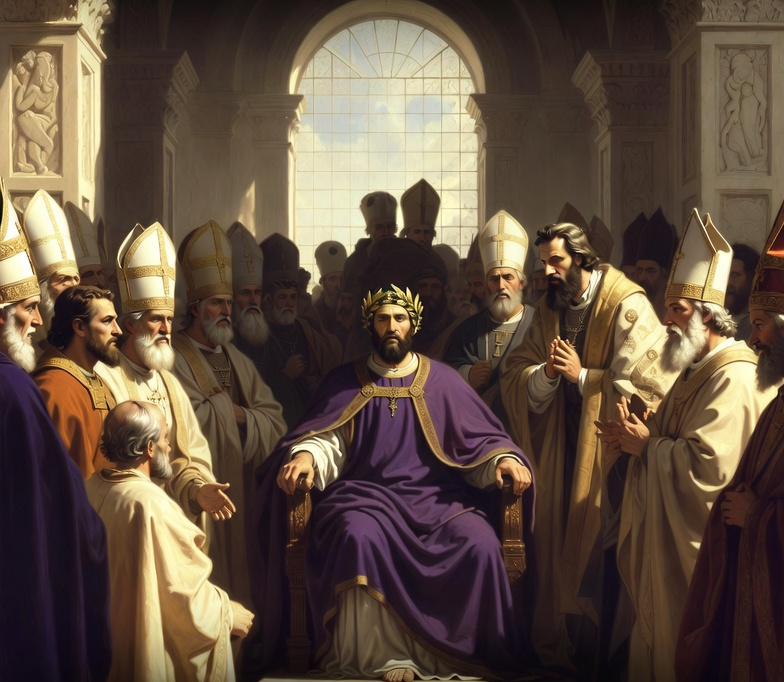
21 Myths Series: Myth 2 — Did Constantine Create the Bible?
Transmission & Canon Myths (Myths 1–5)
Did Constantine Create the Bible? Myths About Bible Reliability and Origins
Myth 2: “Constantine created the Bible at the Council of Nicaea.”
This is one of the most persistent modern myths about the Bible’s origins. It gained massive popularity through Dan Brown’s 2003 novel The Da Vinci Code (and its 2006 film adaptation), which portrayed Emperor Constantine as a power-hungry manipulator who allegedly convened the Council of Nicaea in AD 325 to “create” the Bible, decide Jesus’ divinity by vote, suppress “earlier gospels” that portrayed a more human Jesus, and consolidate political control over Christianity.
The claim is dramatic and conspiracy-laden, but it has no basis in historical evidence.
Why the “Constantine Created the Bible” Myth Persists
This myth persists because it fits a narrative of top-down power and conspiracy. In reality, the Bible’s books were recognized bottom-up by communities that had used, copied, and suffered for them long before any emperor got involved.
What the Council of Nicaea Actually Did
The First Council of Nicaea (called by Constantine) was the first empire-wide gathering of Christian bishops. The main purpose was to resolve the Arian controversy — whether Jesus was fully divine (of the same substance as the Father) or a created being. The council overwhelmingly affirmed Christ’s full deity (the vote was reportedly ~298–2), producing the original Nicene Creed.
There is zero historical evidence that the bishops discussed, voted on, or finalized the list of biblical books. No attendee (including Eusebius or Athanasius) mentioned the canon.
How the Bible Canon Actually Formed
The New Testament canon emerged organically over centuries as the early church recognized books that were:
Apostolic (written by apostles or their close associates)
Widely used in worship and teaching across regions
Consistent with the “rule of faith” (the core gospel handed down from the beginning)
Key Historical Milestones (long before or independent of Nicaea):
By the late 2nd century, the four Gospels, Acts, and most of Paul’s letters were already widely accepted.
Early church fathers like Irenaeus, Tertullian, and Origen quoted a recognizable New Testament core.
In AD 367 (over 40 years after Nicaea), Athanasius of Alexandria listed the exact 27 New Testament books we have today in his Easter letter.
Regional councils (Hippo 393, Carthage 397) later affirmed what churches already recognized — they did not create the canon.
Constantine’s Actual Role
Constantine legalized Christianity (Edict of Milan, AD 313), ended persecution, and ordered copies of Scriptures for churches. He did not edit content, suppress gospels, or decide which books belonged in the Bible.
Jesus’ deity was already clearly taught in the New Testament (John 1:1, 8:58; Philippians 2:6–11; Colossians 1:15–20) and affirmed by Christians long before Constantine was born. Claims that he “burned earlier gospels” or invented Christ’s divinity are fiction.
Why This Matters
Understanding how the Bible canon formed strengthens confidence that the 27 books of the New Testament are not the result of 4th-century politics, but the early church’s recognition of inspired apostolic writings. The Bible wasn’t “created” at Nicaea — it was already being read, treasured, and passed down.
Conclusion
The transmission and canon of Scripture demonstrate remarkable continuity and divine providence, not political invention. The Bible hasn’t been “changed” by Constantine or Nicaea — it was already taking shape through the early church’s faithful witness.
This is Myth 2 in our 21 Myths Series: Transmission & Canon (Myths 1–5).
Previous:
Myth 1 – Has the Bible Been Changed?
Reliable Voices on Bible Canon & Nicaea
Josh Howerton — Addresses Nicaea myths and the organic canon process on his Live Free podcast.
Wes Huff — Textual scholar with detailed videos and articles debunking Constantine’s supposed role. Video: Can I Trust the Bile - Episode 3: The Council of Nicaea.
John MacArthur — Explains the canon as recognized (not created) by the church.
Charlie Kirk — Tackles cultural myths about Bible origins in debates.