Gossip According to the Bible: Why Our Words Wound Deeper Than We May Realize
Gossip is one of the most common and destructive sins in churches, families, workplaces, and social media. It often hides behind “prayer requests,” “I’m just concerned,” or “I’m venting.” But Scripture calls it a fire that defiles the body, divides relationships, and dishonors God.
The Bible does not treat gossip lightly. It links uncontrolled words to broken trust, fractured friendships, and damaged witness.
What Is Gossip?
Gossip is sharing negative, private, or harmful information about others without a redemptive purpose. It might be true. It might be whispered as concern. But if it’s spoken behind their back, driven by curiosity, envy, or the thrill of feeling “in the know,” it crosses the line. Even true information becomes gossip when it is unnecessary and damaging.
John MacArthur defines it as “derogatory information… shared in a tone of confidentiality that is not motivated by doing good to them.” He calls it “the devil’s radio” because it sows discord and destroys reputations.
Martin Luther described gossip as a “common, pernicious plague.” He stressed that even sharing true information maliciously violates the Eighth Commandment (“You shall not bear false witness”).
Proverbs paints a vivid picture:
“The words of a gossip are like dainty morsels: they go down into a person’s innermost parts.” (Proverbs 18:8).
That “dainty morsel” sensation is exactly why it spreads so fast — our hearts crave it. Yet the same chapter warns that “A perverse man stirs up strife. A whisperer separates close friends.” (Proverbs 16:28). One conversation can plant seeds of doubt that fracture lifelong bonds.
Gossip vs. Slander: Close Cousins, Different Weapons
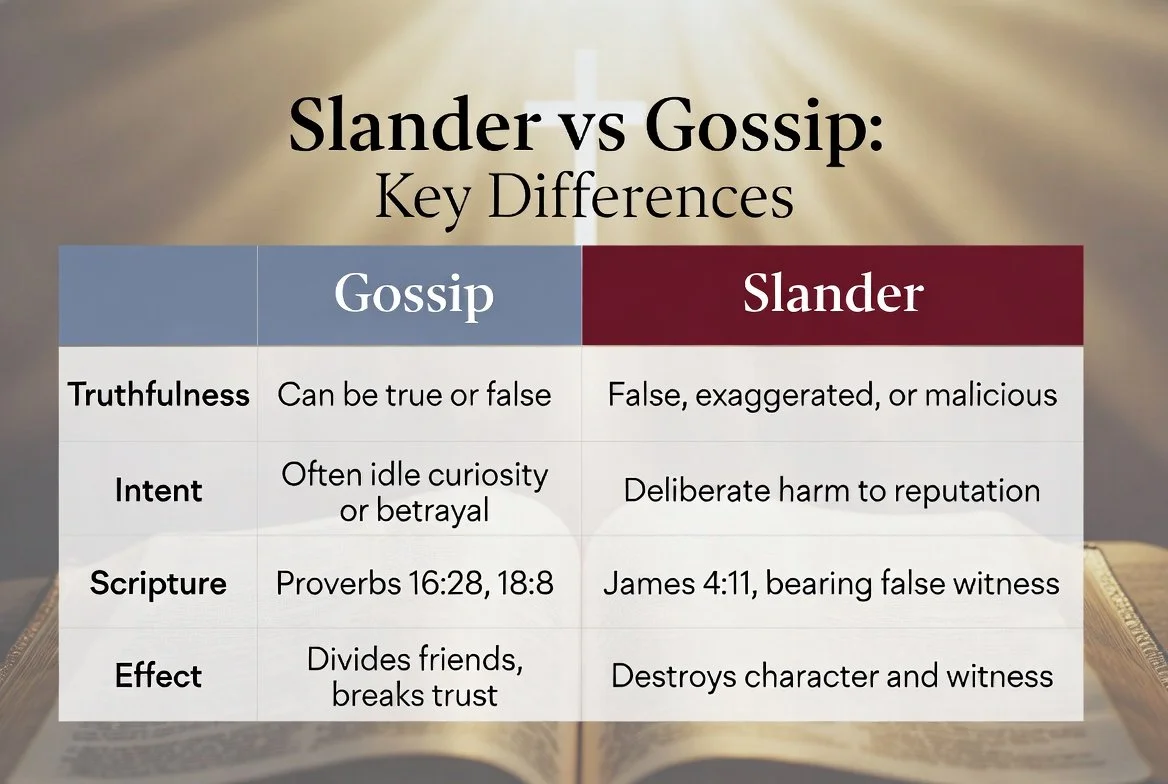
Gossip vs Slander
While they often travel together, Scripture draws a distinction:
Gossip: Spreading private, unnecessary, or unfavorable information (true or false) that erodes trust and unity. It feels like “dainty morsels” (Proverbs 18:8) but betrays confidences and separates friends (Proverbs 16:28). It is often idle or curiosity-driven.
Slander: Deliberate use of false, exaggerated, or malicious statements to damage someone’s reputation. It is “speaking evil” against another (James 4:11) and is essentially bearing false witness. Slander weaponizes speech with the intent to harm or defame.
Both appear in the same dark list in Romans 1:29-30 alongside envy, murder, and deceit. Both grieve the Holy Spirit. The difference in damage? Gossip erodes trust like rust on metal; slander is a sledgehammer to someone’s good name. Either way, the result is division.
Bottom line: Gossip betrays secrets; slander destroys character with lies or distortions. Both grieve the Holy Spirit and have no place in the Christian life.
The Real Stakes
A small group member sighs, “Pray for Sarah — she and her husband are really struggling right now.” It sounds spiritual, but private pain is now public entertainment. In the workplace someone says, “Between us, the pastor clearly didn’t prepare for that sermon.” True or not, the words travel. Credibility erodes through whispers instead of honest conversation.
Social media make it worse. A vague post — “Heavy heart for a friend making terrible choices right now” — invites speculation while letting the poster feel righteous. James 3:5-6 gets to the core: “So the tongue is also a little member, and boasts great things. See how a small fire can spread to a large forest! And the tongue is a fire. The world of iniquity among our members is the tongue, which defiles the whole body, and sets on fire the course of nature…”
These aren’t hypotheticals. Churches have split, friendships dissolved, and witnesses to the gospel have been tarnished — all because of words that “felt like nothing” at the time. Proverbs 18:21 reminds us: “Death and life are in the power of the tongue; those who love it will eat its fruit.”
How to Tame the Tongue: Biblical Techniques That Work
James 3:8 is brutally honest — no human can fully tame the tongue. But the Holy Spirit can. Here are biblical practices that move us from destruction to life-giving speech:
Start with your heart. Jesus said, “…For out of the abundance of the heart, the mouth speaks.” (Matthew 12:34). Fill your mind daily with Scripture and gratitude. When envy or insecurity rises, confess it immediately.
Pray for a guarded mouth. Psalm 141:3 — “Set a guard, O Lord, over my mouth; keep watch over the door of my lips.” Make this your morning prayer.
Run it through the filter. Before speaking about someone else, ask: Is it True? Helpful? Inspiring? Necessary? Kind? If it fails, zip it.
Go directly instead of sideways. Matthew 18:15 gives the clear pattern: If you have an issue with someone, talk to them, not about them. Most problems die when handled with humility and courage.
Replace gossip with encouragement. Ephesians 4:29 flips the script: “Let no corrupt speech proceed out of your mouth, but only what is good for building others up as the need may be, that it may give grace to those who hear.” Turn the urge to criticize into words that bless.
Defend others fiercely. Martin Luther’s advice is gold: Speak well of your neighbor, put the best construction on their actions, and defend them when others tear them down — whether the rumor is true or false.
Acknowledge the Danger
In a culture of rumors and instant sharing, Christians must stand out by speaking grace and truth. Repent of gossip or slander today. Ask God for a clean heart (Psalm 51:10) and commit to words that build up the body of Christ.
Action Step: Recognize the tongue’s power (James 3:1-6) and confess sins of speech daily. Choose one technique above and practice it this week. Share this post with someone who needs it.
May your words bring life, grace, and glory to God.