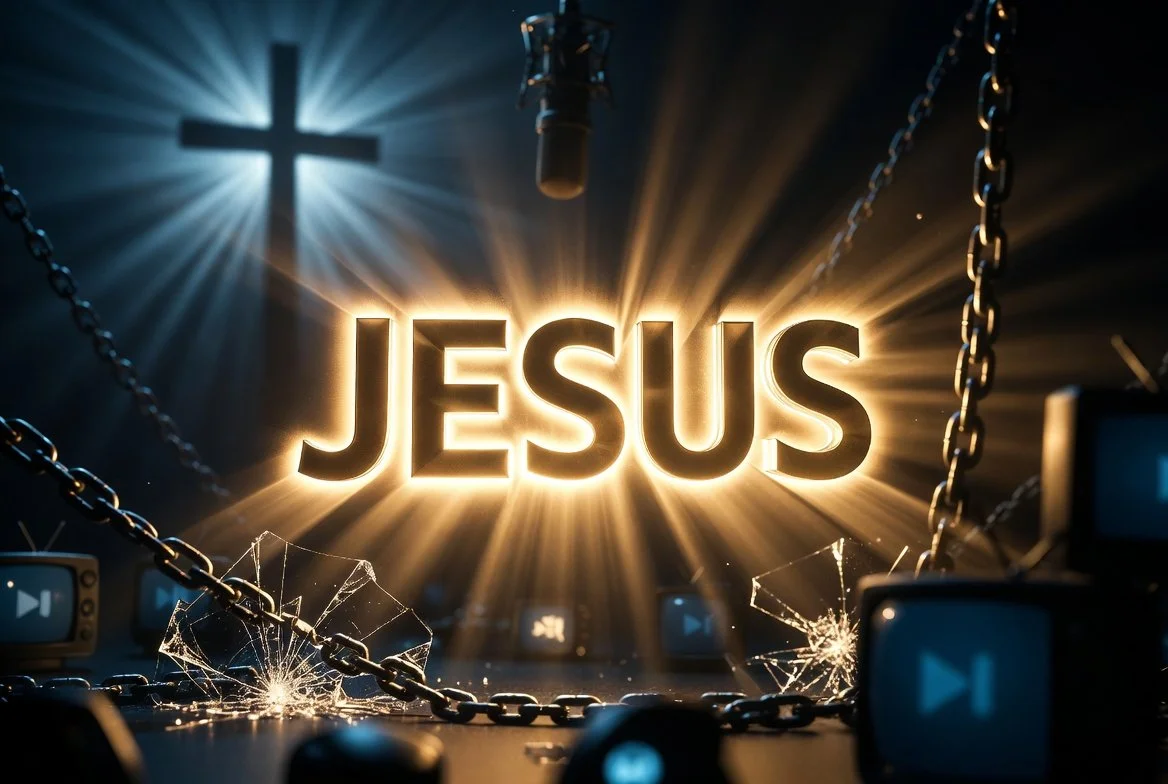
Why Are People Afraid of the Name of Jesus?
In interviews and live broadcasts, the moment someone clearly proclaims the name of Jesus Christ or points to the authority of God’s Word, the feed often cuts, the host pivots, or the segment ends abruptly. Why are so many people afraid of the name of Jesus? These media cutoffs are not random — they reveal a deeper spiritual battle happening in our culture today.
Real Examples: When the Name of Jesus Triggers Interruptions or Edits
Benjamin Watson on CNN (2014)
In December 2014, former NFL player Benjamin Watson was discussing racial tensions and the deeper problem of sin on CNN with host Brooke Baldwin. He shared:
“The issue is not really skin, the issue is sin… The only way to really cure that on the inside is understanding that Jesus Christ died for our sins…”
Almost immediately, the feed went black. Baldwin remarked, “And just like that, we lost him.” Though CNN cited a satellite timing issue, the clip went massively viral.
Watch the clip: CNN cuts off Benjamin Watson for mentioning Jesus
C.J. Stroud on NBC (2024)
Houston Texans quarterback C.J. Stroud opened a post-game playoff interview by saying: “First of all, I just want to give all the glory to my Lord and Savior Jesus Christ…” The live broadcast included the full statement, but NBC edited it out of the version they posted on social media, creating a noticeable cut.
Watch the comparison (edited vs. unedited): NBC accused of editing out C.J. Stroud’s praise of Jesus
Another clear version: NBC editing CJ Stroud Jesus mention
These high-profile cases are part of a noticeable pattern: vague references to “God” are often tolerated, but the specific name of Jesus Christ frequently leads to quick cuts, edits, or discomfort in secular media spaces.
Why People Fear the Name of Jesus
Jesus never promised a comfortable, universally accepted message — Jesus Himself warned that His coming would bring division, not universal peace on earth in the sentimental sense. He declared that He is “the way, the truth, and the life” and that no one comes to the Father except through Him (John 14:6). This exclusive claim confronts sin, challenges pride, and demands repentance.
Pastor Josh Howerton emphasizes, we must not tolerate any redefinition of Jesus — He defines Himself through Scripture, and any other “Jesus” is a false one (see 2 Corinthians 11:4). This uncompromising truth makes many uncomfortable.
John MacArthur explains the discomfort through the lens of spiritual warfare. The battle is not primarily against people, but against “arguments and every lofty opinion raised against the knowledge of God” (2 Corinthians 10:5). False ideas, secular worldviews, and man-made religions act as strongholds that keep people from Christ.
What Media Cutoffs Reveal About the Spiritual Battle
Charlie Kirk has faced significant backlash for unapologetically proclaiming biblical truth in cultural and political arenas. This mirrors Jesus’ own warning that His coming brings division because light exposes darkness. This reaction fulfills what Jesus predicted: His coming brings division because light exposes darkness.
“This is the judgment, that the light has come into the world, and men loved the darkness rather than the light; for their works were evil. For everyone who does evil hates the light, and doesn’t come to the light, lest his works would be exposed.” (John 3:19-20, WEB)
Ken Ham of Answers in Genesis reminds us that when culture rejects the authority of God’s Word — from creation to morality — the exclusive claims of Christ become increasingly intolerable.
The Unshakable Power in the Name of Jesus
Despite the fear and pushback, the name of Jesus carries unmatched authority. Wes Huff, a respected Christian apologist, has presented powerful evidence for the resurrection of Jesus even on skeptical platforms like the Joe Rogan Experience. The historical facts stand firm.
Lee Strobel, former atheist turned apologist, investigated the evidence for Christ and concluded that the historical facts demand a verdict: Jesus is who He claimed to be. Rejecting that verdict often stems from a deeper unwillingness to surrender control.
Martin Luther, the German Reformer, boldly stood against the religious and cultural powers of his day with “Christ Alone” and “Scripture Alone.” He knew the Gospel offends human pride because it offers salvation by grace.
Folsom Bible Church reminds believers of this hope: “Whoever will call on the name of the Lord will be saved” (Romans 10:13, WEB). Jesus took the punishment we deserve and rose victorious.
The Hope Behind the Fear
The fear of the name of Jesus ultimately reveals its power. Darkness hates the light. Pride hates the cross. Yet for those who come to Him, Jesus offers forgiveness, freedom, and eternal life.
“For God so loved the world, that he gave his only born Son, that whoever believes in him should not perish, but have eternal life.”
If the name of Jesus stirs unease in your heart today, don’t run from it. Run to Him. Repent, believe, and experience the transforming power that has changed millions of lives — including former skeptics like Lee Strobel.
The world may try to silence the name, but it cannot extinguish its light.
FAQ: Why Are People Afraid of the Name of Jesus?
Why do interviewers cut people off when they mention Jesus?
It often stems from spiritual discomfort. The name of Jesus exposes sin and demands a response, which many prefer to avoid.
What does the Bible say about the power of Jesus’ name?
Scripture teaches that at the name of Jesus every knee will bow (Philippians 2:9-11). His name brings salvation, deliverance, and ultimate victory.
How should Christians respond to cultural fear of Jesus?
Speak the truth in love, stand firm like Martin Luther and modern voices such as John MacArthur and Charlie Kirk, and trust that God’s Word is powerful.