The Bible's Structure and Human Authors
A Complete Traditional Guide to the 66 Books, Their Writers, Dates, Locations, and Languages
The Bible is not a single book but a divine library of 66 books written over approximately 1,600 years by about 40 different human authors on three continents (Asia, Africa, and Europe) in three languages — primarily Hebrew and Greek, with a small amount of Aramaic.
Despite this incredible diversity in time, place, culture, and background (kings, shepherds, fishermen, prophets, tax collectors, and doctors), the Bible displays remarkable unity because its ultimate Author is the Holy Spirit.
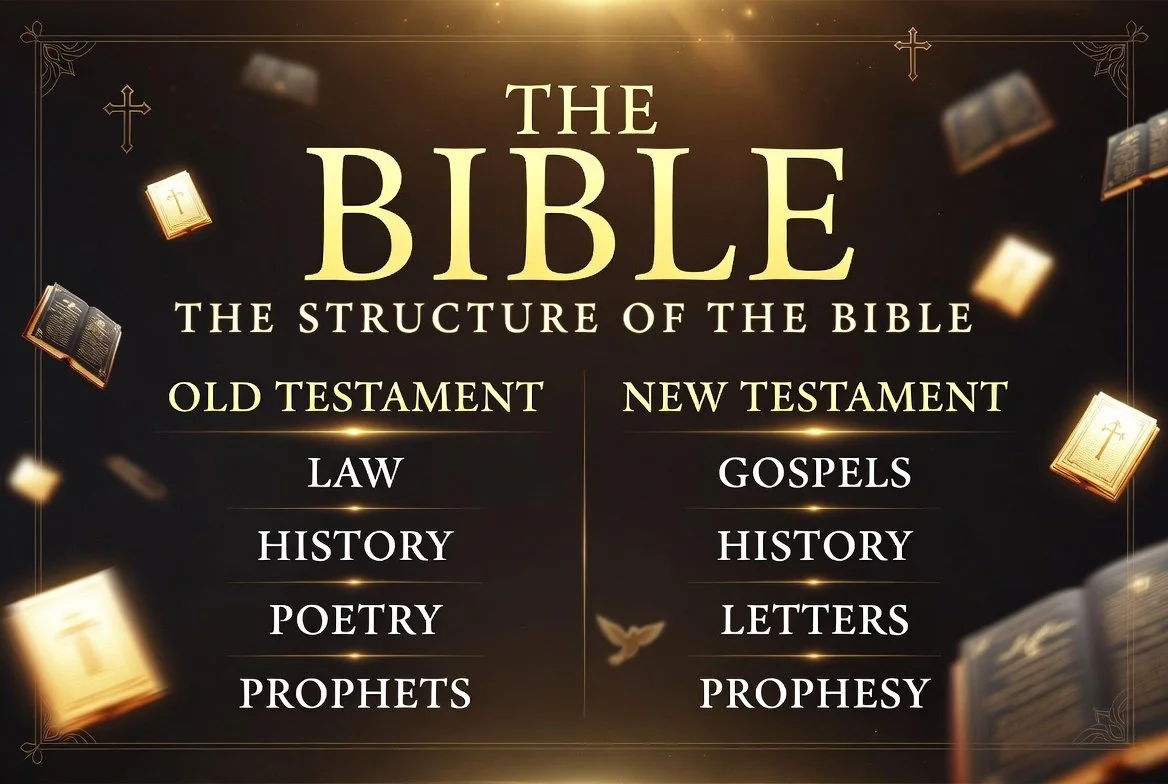
Divine library of 66 books
The Bible displays remarkable unity because its ultimate Author is the Holy Spirit.
The Overall Structure of the Bible
The Bible divides into two main sections that tell one unified redemption story:
Old Testament (39 books) — God’s dealings with Israel, the Law, history, wisdom, and prophecy pointing to the coming Messiah.
Law/Pentateuch/Torah (5 books; 1445–1405 BC): Foundation of creation, covenant, and law. Genesis, Exodus, Leviticus, Numbers, Deuteronomy: Moses
History (12 books; 1405–430 BC): Israel’s conquest, kings, exile, and return.
Joshua (~1405–1385 BC): Joshua (possibly with Phinehas for closing verses)
Judges (~1043 BC), Ruth (~1030–1010 BC): Anonymous (traditionally associated with Samuel). Samuel
1 Samuel-2 Samuel (~1000–900 BC): Samuel, Nathan, and Gad
1 Kings-2 Kings (~561–538 BC): Anonymous
1 Chronicles-2 Chronicles (~450–430 BC), Ezra (~450–400 BC): Ezra
Nehemiah (~445–430 BC): Nehemiah
Esther (~480–470 BC): Anonymous
Poetry/Wisdom (5 books; c. 1410–450 BC): Worship, wisdom, and human experience.
Job (~600 BC): Anonymous (possibly Job). Job
Psalms (~1410–450 BC): Multiple authors. David (majority), Moses (Psalm 90), Asaph, Solomon, Heman, Ethan, and others.
Proverbs (~971–686 BC), Ecclesiastes (~940–930 BC), Song of Songs (~971–965 BC): Solomon
Prophets (17 books; c. 8th–5th centuries BC): God’s messages of judgment, hope, and restoration.
Major Prophets (c. 740–535 BC)
Isaiah (~740–680 BC): Isaiah
Jeremiah (~627–580 BC), Lamentations (~586 BC): Jeremiah
Ezekiel (~593–571 BC): Ezekiel
Daniel (~605–535 BC): Daniel
Minor Prophets (~760–430 BC)
Hosea: Hosea
Joel: Joel
Amos: Amos
Obadiah: Obadiah
Jonah: Jonah
Micah: Micah
Nahum: Nahum
Habakkuk: Habakkuk
Zephaniah: Zephaniah
Haggai: Haggai
Zechariah: Zechariah
Malachi: Malachi
New Testament (27 books) — The life of Jesus, the early church, and letters to believers.
Gospels (4 books): Life, death, and resurrection of Jesus.
Matthew (late 40s AD): Matthew
Mark (late 30s AD): Mark
Luke (~45-53 AD): Luke
John (90s AD): John
History (1 book; Acts ~63–64 AD)
Acts – Spread of the early church: Luke
Epistles/Letters (21 books): Doctrine, encouragement, and correction for churches and individuals.
Paul’s Letters (13 books): Paul
Romans (~57 AD)
1 Corinthians (~53-57 AD)
2 Corinthians (~55-56 AD)
Galatians (~48-49 AD)
1-2 Thessalonians (~53-55 AD)
Prison/Captivity Letters: Ephesians/Philippians/Colossians/Philemon (~60-62 AD)
Pastoral Letters: 1-2 Timothy/Titus (Mid-to-late 60s AD)
General Epistles (8 books)
Hebrews (60s AD): Unknown
James (~45-50 AD): James
1-2 Peter (60s AD): Peter
1-3 John (~90-95 AD): John
Jude (60s AD): Jude
Prophecy (1 book; Revelation ~90-95 AD)
Revelation — Final victory of Christ and the new creation: John
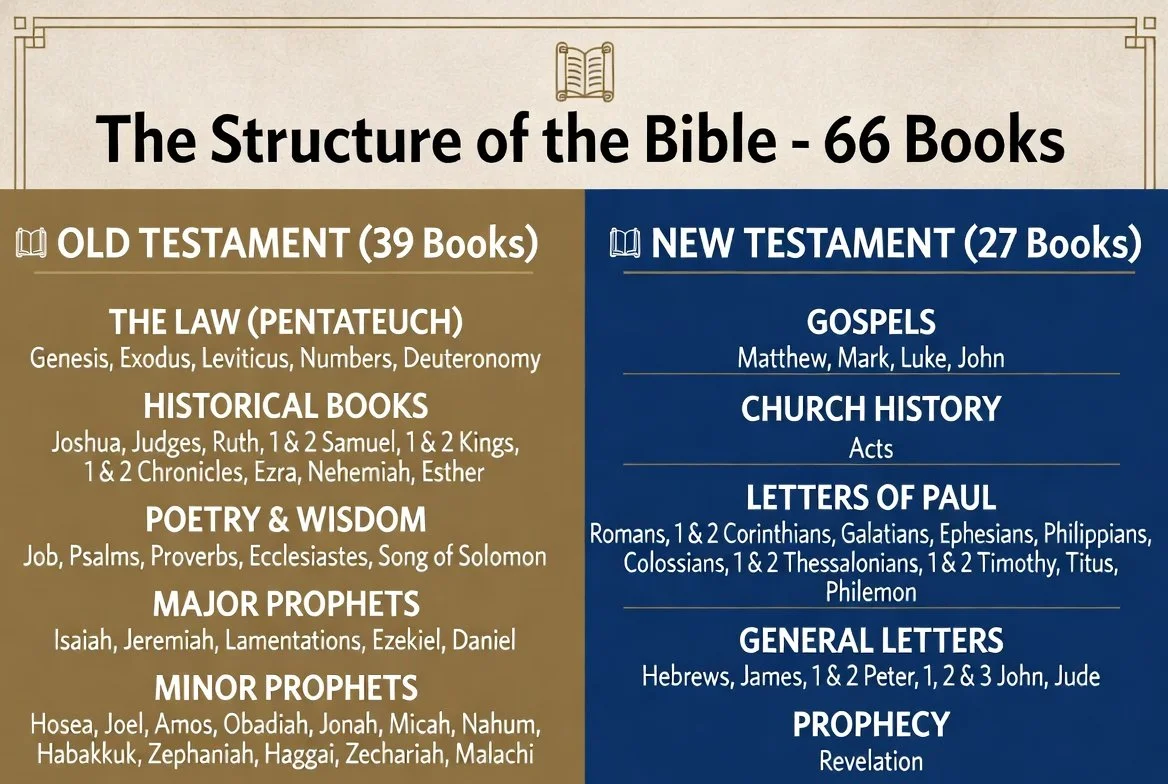
66 Books of the Bible
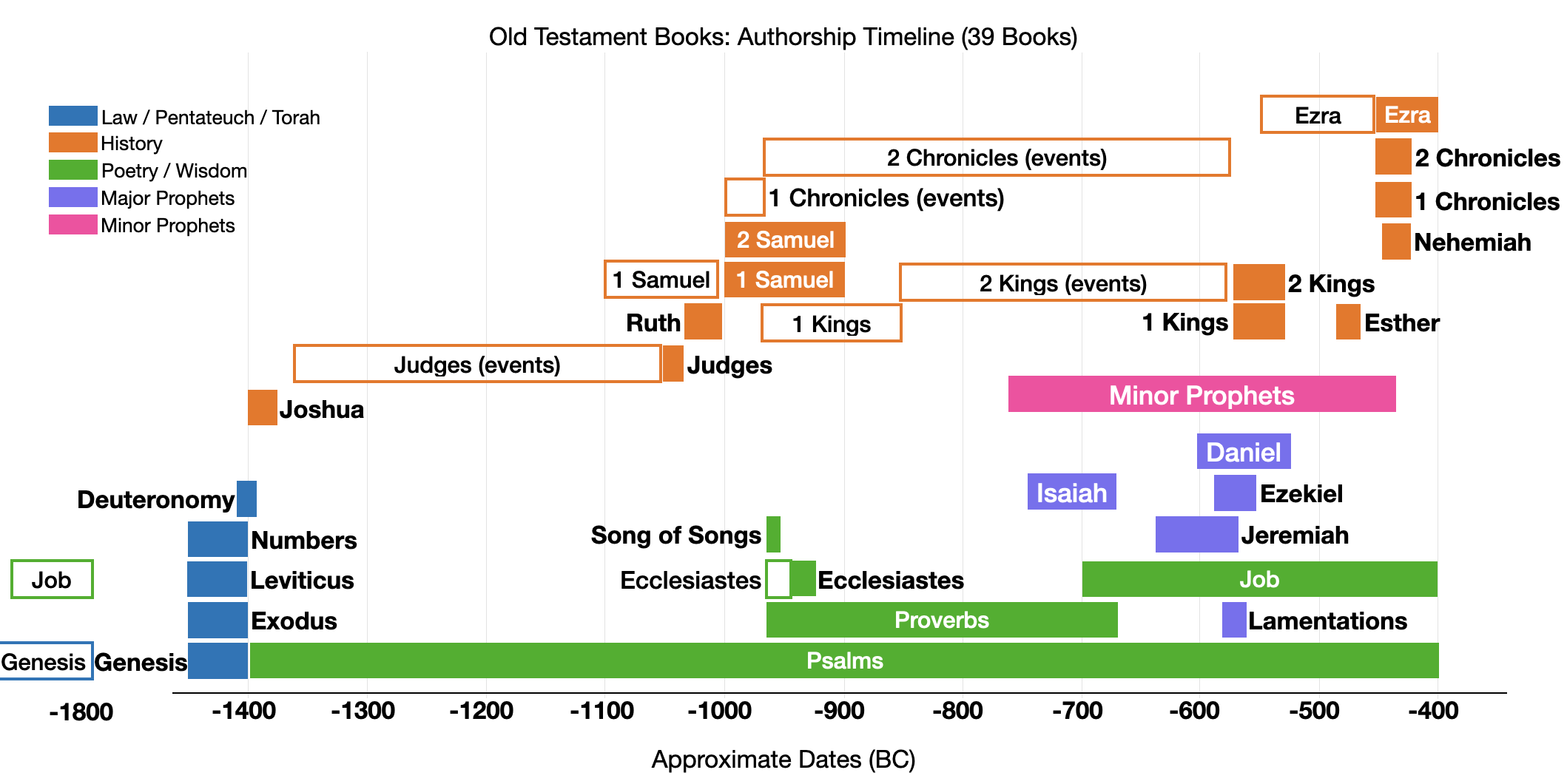
Occupations or roles of Bible authors, limited to what is directly or clearly stated in the biblical text itself (not later traditions or assumptions about authorship). Many books do not name their author within the text, and few explicitly state an occupation tied to writing.
Human Authors of the Old Testament
Primary language: Biblical Hebrew (almost the entire Old Testament).Aramaic sections (small portions): Ezra 4:8–6:18 and 7:12–26; Daniel 2:4–7:28; Jeremiah 10:11 (one verse); A few isolated words or phrases elsewhere (e.g., Genesis 31:47).
Moses (associated with Pentateuch/Torah: Raised as a prince in Pharaoh’s court (Exodus 2:1–10); later a shepherd (Exodus 3:1). He is described as a leader, lawgiver, and prophet.
Amos (Book of Amos): Shepherd and caretaker of sycamore-fig trees. “I was neither a prophet nor the son of a prophet, but I was a shepherd, and I also took care of sycamore-fig trees” (Amos 7:14).
David (many Psalms): Shepherd in his youth (1 Samuel 16:11; 17:34–35); later warrior and king.
Nehemiah (Book of Nehemiah): Cupbearer to the Persian king (Nehemiah 1:11; 2:1). He later served as governor.
Ezra (Book of Ezra): Scribe/teacher skilled in the Law of Moses (Ezra 7:6, 11). “Ezra... was a teacher well versed in the Law of Moses.”
Daniel (Book of Daniel): Advisor and high official in the Babylonian and Persian courts (Daniel 1–6; e.g., appointed to administrative roles and interpreted dreams).
Ezekiel (Book of Ezekiel): Priest (Ezekiel 1:3).
Human Authors of the New Testament
The New Testament was written in Koine Greek (the common language of the Roman Empire). Locations include Israel, Asia Minor (modern Turkey), Greece, and Rome. Authors were mostly apostles or their close associates writing in the 1st century AD.
Matthew (Gospel of Matthew): Tax collector (publican). “As Jesus passed by from there, he saw a man called Matthew sitting at the tax collection office. He said to him, ‘Follow me.’ He got up and followed him” (Matthew 9:9; also called Levi in parallel accounts).
Luke (Gospel of Luke and Acts): Physician. “Luke the beloved physician” (Colossians 4:14).
Paul (13 epistles/letters): Tentmaker (leatherworker). In Corinth, “and because he practiced the same trade, he lived with them and worked, for by trade they were tent makers.” (Acts 18:3; see also his references to manual labor in 1 Corinthians 4:12, 1 Thessalonians 2:9).
Peter (1 & 2 Peter): Fisherman. Called while “…Simon, who is called Peter, and Andrew, his brother, casting a net into the sea, for they were fishermen.” (Matthew 4:18; also Mark 1:16).
John (Gospel of John, epistles, Revelation): Fisherman (one of the sons of Zebedee, called with Peter and Andrew in the same fishing context, Matthew 4:21).
Why This Matters
From Moses in the desert to John on Patmos (or in exile), these human authors wrote under the inspiration of the same God. Their writings — spanning law, history, poetry, prophecy, gospel, and letters — form one cohesive story of creation, fall, redemption, and restoration through Jesus Christ.
Whether you’re new to Scripture or a longtime student, understanding the human side of its composition deepens appreciation for its divine unity. As Wes Huff often notes, the Bible’s harmony across such diversity is powerful evidence of its supernatural origin.
The Bible remains the most reliable and transformative book ever written — because its ultimate Author never changes.
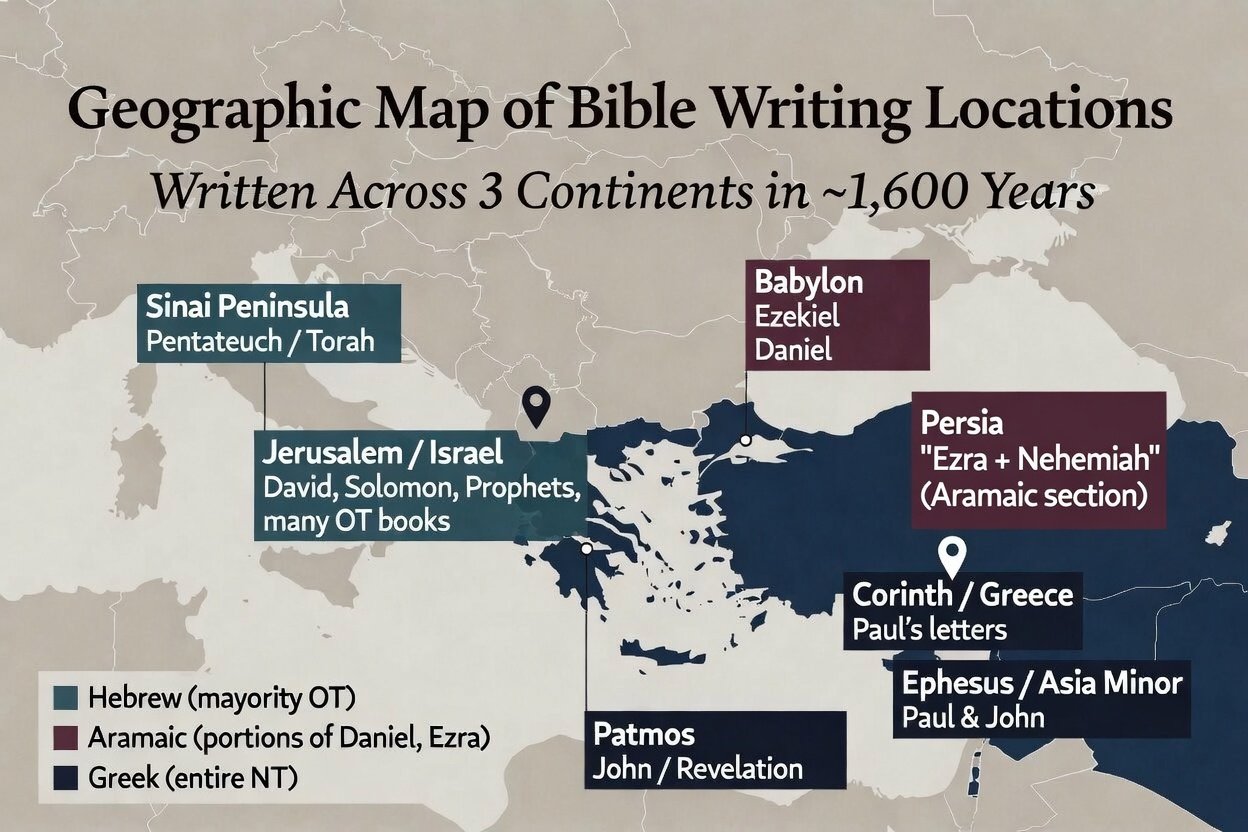
The Bible written on 3 continents, over 1600 years