Why Did Jesus Have to Suffer & Die?
Have you ever looked at the cross and wondered, Why did Jesus have to suffer so much?
The innocent, perfect Son of God endured betrayal, torture, public humiliation, and the crushing weight of divine wrath. Was it only about punishment for sin? Or is there something more — something deeply personal about God’s heart toward our pain?
The answer is both. Jesus suffered to satisfy God’s perfect justice and to enter fully into human suffering so He could sympathize with us from the inside. This wasn’t a tragic detour. It was the centerpiece of God’s eternal plan of redemption and compassion.
Story of a Just King
Pastor Josh Howerton tells a powerful story that helps us feel the weight of this question in a way we can relate to: Watch it on X. Summary below:
Once upon a time in a far-off kingdom, there was a king known by everyone as the most just and loving king who had ever lived. Then it was discovered that someone was stealing from the king’s treasury. Being just, the king issued an edict: the thief would receive 10 lashes. The theft continued, so the penalty rose to 20 lashes… then 30… until finally the king decreed 40 lashes — a death sentence.
The theft continued until it was discovered that the thief was none other than the king’s own daughter.
A question rippled through the kingdom: Would he forgive her and cease to be just? Or would he carry out the sentence and cease to be loving?
The king decided the sentence was just and the punishment must fall. His daughter was marched before the people. As the executioner raised the whip, the king shouted “Stop!” He took off his own shirt, wrapped his body around his daughter, and said, “The sentence must stand. It’s just. Hit her.”
The executioner objected: “But king, those lashes will fall on you.” The king replied, “The sentence must stand. It’s just. Hit her.”
Forty lashes fell on the body of the king that protected his daughter. The king died in her place. She went free because he took the penalty.

40 lashes fell on the king.
King’s daughter went free because he took the penalty.
In that story the king was both just (payment for the crime had to be made) and the justifier of the ungodly (she went free). That is why Jesus had to die on the cross. God is just — so payment for sin must be made. God is love — so He made the payment Himself.
As Scripture says: “For the wages of sin is death, but the free gift of God is eternal life in Christ Jesus our Lord” (Romans 6:23). It is substitutionary sacrifice: “In my place, condemned He stood.”
The Seriousness of Sin and the Demand for Justice
Suffering and death were never part of God’s original “very good” creation. Sin entered through Adam and brought death, pain, and brokenness as its consequences. See Adam In The Fall for the breakdown.
All afflictions, sickness, catastrophes, and death result from humanity’s failure to obey God’s holy law.
Our sin is not a minor issue — it is rebellion against a perfectly just and holy God. Atonement is necessary because of who God is (infinitely just and holy) and who we are (guilty before Him). Divine justice requires that sin be addressed. Without a perfect payment, we remain separated from God forever.
John MacArthur has preached powerfully on how Christ’s suffering addressed this: through it, God’s justice was satisfied and redemption was accomplished.
Fulfilled Prophecy and God’s Sovereign Plan
None of this was accidental. Christ’s specific sufferings were predestined by God before the foundation of the world and prophesied in the Old Testament Scriptures. God planned the cross from eternity because it would most clearly display both His justice and the magnificence of His grace.
The prophet Isaiah saw it centuries in advance:
“Surely he has borne our sickness
and carried our suffering;
yet we considered him plagued,
struck by God, and afflicted.
But he was pierced for our transgressions.
He was crushed for our iniquities.
The punishment that brought our peace was on him;
and by his wounds we are healed.
All we like sheep have gone astray.
Everyone has turned to his own way;
and Yahweh has laid on him the iniquity of us all.”
Jesus Suffered in Our Place — Substitution
This is the heart of the gospel. Jesus didn’t suffer for His own sins — He had none. He suffered for ours.
“Because Christ also suffered for sins once, the righteous for the unrighteous, that he might bring you to God, being put to death in the flesh, but made alive in the Spirit”
Pastor Josh Howerton describes the darkness that fell for three hours on the cross: Jesus cried out in agony because the Father turned His face away — not because the Son had sinned, but so the Father could turn His face toward us. Jesus drank the cup of God’s wrath so we never have to.
Charlie Kirk highlights the brutality: the perfect, divine One took on human flesh and endured the most torturous death imaginable — yet turned it into victory.
Apologist Wes Huff notes that even skeptical historians affirm the historical reality of Jesus’ crucifixion under Pontius Pilate. The suffering was real, purposeful, and substitutionary.
Triumph Through Suffering
John MacArthur’s teaching on “The Triumph of Christ’s Suffering” is profound. What the world saw as defeat was actually the greatest victory. Through His unjust suffering, Jesus:
Bore our sins and brought us to God
Triumphed over evil spiritual powers
Completed the work of redemption
Rose in power
The cross rewrites every headline of human brokenness. Humiliation became the place of conquest. Death was defeated.
God’s Sympathy — He Truly Knows Our Pain
Here is where the cross reveals something profoundly personal about God’s heart. Because Jesus fully entered human experience — pain, temptation, betrayal, grief, exhaustion, and even separation from the Father — He can sympathize with us.
“For we don’t have a high priest who can’t be touched with the feeling of our infirmities, but one who has been in all points tempted like we are, yet without sin.”
Jesus wept. He felt rejection. He endured physical agony. He knows what it is to suffer unjustly. This makes Him a merciful and faithful High Priest who understands our weaknesses from the inside.
Martin Luther’s “theology of the cross” captures this beautifully: God is most clearly known not in raw displays of power, but in the shame and suffering of the cross. God didn’t stay distant — He drew near in the person of His Son.
Lee Strobel often reminds us that God took the worst thing (the death of His own Son) and turned it into the best thing. Through the cross, God steps into our suffering with us and ultimately defeats it.
What This Means for Your Suffering Today
Because Jesus suffered, your suffering is never meaningless or unseen. You can bring your pain to a Savior who truly understands.
Sharing in Christ’s sufferings draws us closer to Him and helps us treasure His grace more deeply. The cross doesn’t just pay for sin — it gives us a sympathetic High Priest who helps us in our time of need.
When you face illness, loss, anxiety, injustice, or doubt, you can pray with confidence: “Lord Jesus, You know exactly what this feels like.” He doesn’t offer cold explanations from afar. He offers presence, help, and ultimate hope.
One day, He will wipe away every tear (Revelation 21:4). The same Jesus who suffered and sympathizes is now risen and interceding for us.
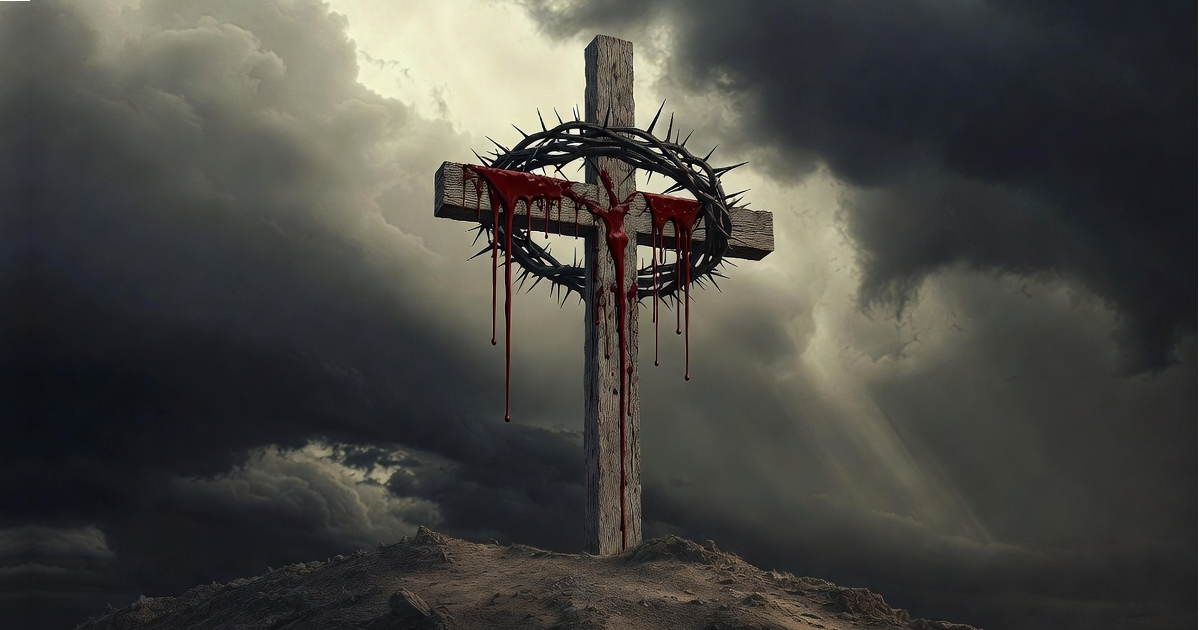
Jesus Died on the Cross for Us