Beware the Wolves: What the Bible Warns About False Teachers
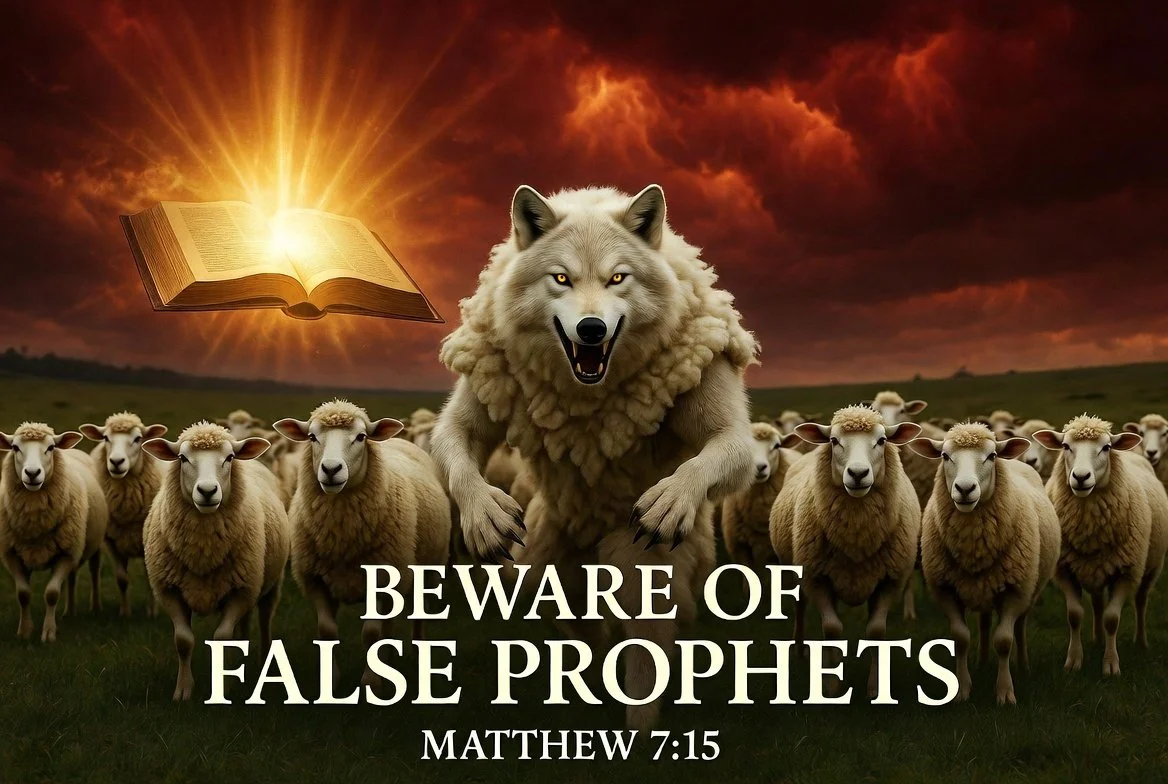
Imagine a shepherd who opens the gate for wolves dressed in shepherd’s clothing — wolves that tell the sheep the fence is outdated and the pasture rules are too restrictive. The flock cheers the “inclusion,” but the wolves devour from within.
That is the danger Jesus, Paul, Peter, and John warned us about. False teachers don’t always look evil. Many wear clerical collars, hold political office, or build massive online platforms. Some even claim to love Jesus while redefining His Word to fit the culture — especially on sexuality, marriage, and human identity.
The Bible does not stay silent on this.
The Bible’s Repeated Warnings About False Teachers
Jesus set the tone:
“Beware of false prophets, who come to you in sheep’s clothing, but inwardly are ravening wolves. By their fruits you will know them. Do you gather grapes from thorns or figs from thistles?”
Peter warned that false teachers would arise inside the church:
“But false prophets also arose among the people, as false teachers will also be among you, who will secretly bring in destructive heresies, denying even the Master who bought them, bringing on themselves swift destruction. Many will follow their immoral ways, and as a result, the way of the truth will be maligned.”
John commanded testing:
“Beloved, don’t believe every spirit, but test the spirits, whether they are of God, because many false prophets have gone out into the world.”
These are not optional suggestions. They are commands for every believer.
The command is clear: Don’t believe everything you hear. Test it.
Modern Examples of Twisting Scripture
False teachers today often deny or downplay clear biblical teaching on sexuality and identity. They directly contradict the Bible by claiming that God’s clear design for marriage (one man and one woman for life), His definition of sexual immorality (including homosexual practice as abomination), and His intentional creation of male and female are merely 'cultural,' outdated, or 'misunderstood.' Instead of submitting to Scripture, they twist it to affirm what God calls sin, all to gain applause and favor from the culture and their constituents.
This is classic false teaching: using smooth words to exploit and deceive (2 Peter 2:3). It leads people away from repentance and toward judgment.
John MacArthur has consistently taught that altering the gospel or God’s moral law marks a different doctrine — one that denies the authority of Christ’s words. True teachers uphold what Scripture says about Christ and holy living. Compromising on sexual ethics is not loving — it is unloving, because it withholds the truth that sets people free.
Ken Ham repeatedly warns that once you compromise the authority of God’s Word in one area (like creation or sexuality), it opens the door to deeper error. Pastors or politicians who affirm LGBT ideology while claiming Christian leadership are not “evolving” — they are rejecting the plain teaching of Scripture.
What False Teachers Actually Look Like
According to Scripture, here are the consistent marks:
They twist or deny core truths about Jesus (especially His deity, humanity, or finished work on the cross).
They promote a different gospel — adding works, subtracting repentance, or turning the gospel into a prosperity formula.
Their character eventually shows rotten fruit — pride, greed, sexual immorality, or division.
They exploit people for money, fame, or power (2 Peter 2:3).
They often appear extremely spiritual and quote the Bible out of context.
A false teacher is someone who teaches falsehood — and especially one who resists correction. False teachers as those who teach falsehood and resist correction. When leaders redefine sin to please constituents or cultural trends, they fit this description exactly.
Compromise on the authority of Scripture (starting with Genesis) often leads to deeper doctrinal erosion. Watch out for false teachers on social media who mix truth with error.
How to Test Every Teacher
The Bible gives us a simple, repeatable process:
1. Test the Spirits (1 John 4:1-3)
Does this teacher confess that Jesus Christ has come in the flesh? Do they uphold the full deity and humanity of Jesus?
2. Examine the Fruit (Matthew 7:16-20)
Look at their life and the long-term results of their teaching. Does it produce humility, holiness, love for Scripture, and genuine transformation — or division, greed, and confusion?
3. Compare Everything to Scripture
This is what Martin Luther fought for during the Reformation: Sola Scriptura—Scripture alone is the final authority. If a teacher’s message contradicts the clear teaching of the Bible, it must be rejected.
4. Ask the Hard Questions
Does this teaching make much of Jesus or much of the teacher?
Does it call people to repentance and faith, or to self-improvement and blessing?
Is the gospel presented as God’s free gift through Christ’s finished work — or something we earn or enhance?
Sound teachers welcome biblical examination. False ones often deflect or attack questioners.
Why This Matters More Than Ever
We live in an age of endless content. A charismatic personality + emotional music + a few Bible verses can go viral overnight. But popularity is not the same as truth.
Discipleship must be rooted in the Word, not in personality or experience alone. When we neglect discernment, we risk leading people (or being led ourselves) into spiritual danger.
False teachers don’t just teach error — they often shipwreck faith and malign the way of truth (2 Peter 2:2).
The Shepherd Is Greater Than the Wolves
False teachers will face judgment (2 Peter 2). But Jesus, the Good Shepherd, protects His sheep. He has given us His Word as a sharp sword and His Spirit as our guide.
Don’t be deceived by smooth talk or political expediency. Stand on the unchanging truth of Scripture. Call sin what God calls it. Offer the hope of the gospel to all — including those struggling with same-sex attraction or gender confusion — because Christ transforms lives.
The wolves are active. But the Word endures forever.