What Jacob’s Twenty Years Teach Us When We Are Tired of Waiting
Love That Waits, Deception That Backfires, and God’s Sovereign Timing
Have you ever waited years for something — or someone — you deeply desired, only to face unexpected twists, delays, and hard work? Jacob’s story in Genesis is one of the most relatable and profound examples in Scripture. He didn’t just wait 7 years for Rachel. After Laban’s shocking deception, he worked another 7 years. Then he stayed 6 more years for his wages. That’s 20 years total.
If you have already been waiting a long time, that number should not sound neat. Twenty years is a large piece of a life. Friends may have stopped asking. You may be tired of explaining. You may wonder if hope is just a habit now. This story is still for you.
What does this specific breakdown mean? Far more than ancient history. It reveals powerful truths about patient love, reaping what you sow, God’s justice mixed with grace, and divine providence turning human mess into redemptive glory.
The Biblical Account
Jacob fled to his uncle Laban after deceiving his father Isaac and brother Esau. He fell in love with Laban’s beautiful younger daughter, Rachel.
“Jacob loved Rachel. He said, ‘I will serve you seven years for Rachel, your younger daughter.’”
Laban agreed. Jacob worked faithfully.
“Jacob served seven years for Rachel. They seemed to him but a few days, for the love he had for her.”
On the wedding night, Laban tricked him — giving him Leah (the older sister with “weak eyes”) instead. Jacob protested. Laban’s reply?
“Laban said, ‘It is not done so in our place, to give the younger before the firstborn. Fulfill the week of this one, and we will give you the other also for the service which you will serve with me for seven more years.’” (Genesis 29:26-27)
Jacob completed the bridal week with Leah, then married Rachel and worked another seven years.
Years later Jacob wanted to leave. Laban persuaded him to stay for wages. Jacob’s clever breeding strategy with the flocks succeeded dramatically — because God blessed it. Jacob later reminds Laban:
“These twenty years I have been in your house. I served you fourteen years for your two daughters, and six years for your flock, and you have changed my wages ten times.”
20 years of waiting: 7 years (for Rachel) + 7 years (after deception, still for Rachel) + 6 years (for wages/flocks) = 20 years of testing, growth, and unexpected blessing.
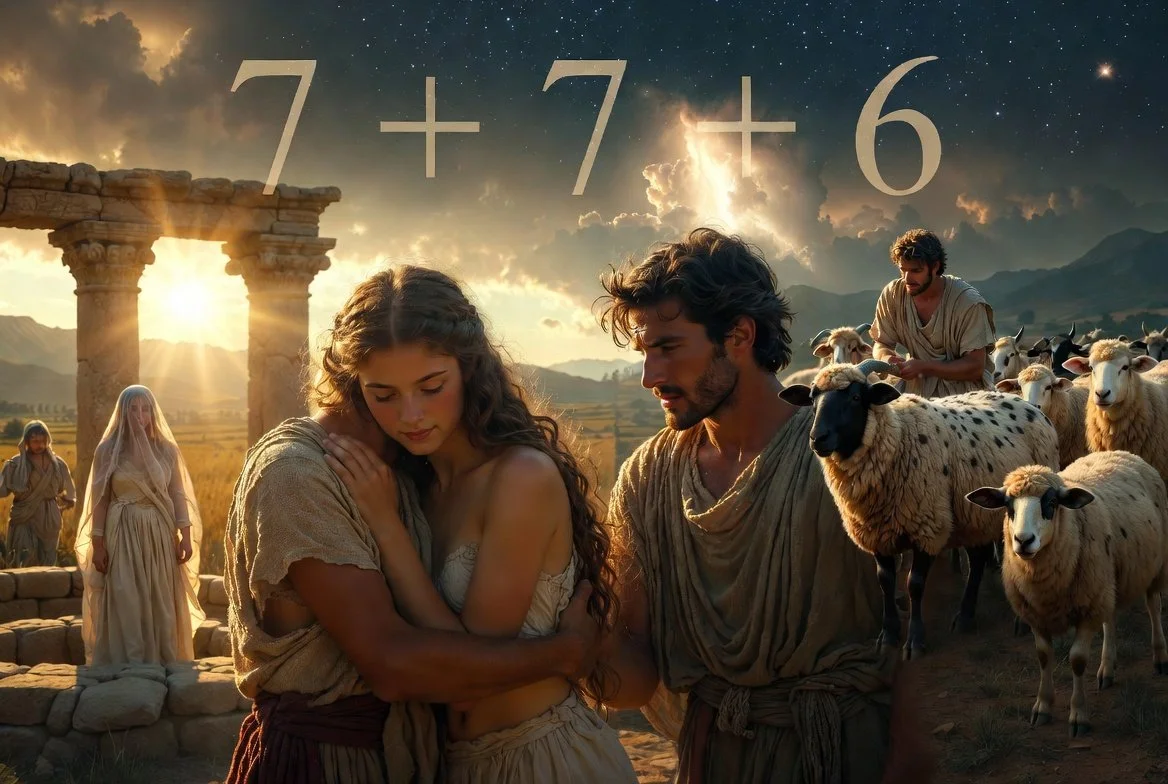
20 Years of Waiting
The First 7 Years: Love That Makes Time Fly
Jacob’s love for Rachel was so intense that seven years felt like a few days. This isn’t romantic fluff — it’s a biblical picture of patient, sacrificial love.
As John MacArthur has noted in his teaching on Genesis, Jacob’s deep affection transformed grueling labor into something that passed quickly. True love waits. It serves. It doesn’t demand instant gratification.
Modern parallel: Whether you’re waiting for a spouse, a breakthrough in career/ministry, healing, or a dream, God often uses long seasons to deepen our love for Him and for the gift itself. The wait reveals (and builds) character.
Lesson: Love that endures waiting is rare — and powerful. It points us to Christ, who “…for the joy set before Him endured the cross…” (Hebrews 12:2).
The Second 7 Years: Deception Meets Divine Justice (and Grace)
Laban’s trick was devastating. Jacob, the master deceiver (who stole Esau’s blessing), was now deceived on his own wedding night. Jacob reaped what he sowed (Galatians 6:7).
Yet God sovereignly used Laban’s evil for good:
Leah became the mother of six of Jacob’s sons (including Judah, through whom the Messiah would come).
The rivalry between Leah and Rachel ultimately produced the 12 tribes of Israel.
Jacob grew in humility and dependence on God.
What Laban meant for harm, God wove into the story of redemption.
Lesson: God is just — deception and manipulation don’t ultimately win. But He is also gracious, turning our consequences and others’ sins into something beautiful for His purposes. This is the same God who later told Joseph (Jacob’s son): “…you meant evil against me, but God meant it for good…” (Genesis 50:20).
The Final 6 Years: Human Effort + Supernatural Blessing
After 14 years, Jacob tried to leave. Laban changed the deal again. Jacob proposed a wage based on speckled/striped animals. He used selective breeding (human wisdom/strategy), but God supernaturally multiplied the flocks in Jacob’s favor.
Those 6 extra years were not wasted. They prepared Jacob financially and spiritually to return to the Promised Land as a wealthy man with a large family. The number 6 often symbolizes human effort or the created order (man was made on the sixth day). Here it contrasts beautifully with the two “perfect” 7s of covenant and family.
Lesson: God blesses diligent work, but ultimate increase comes from Him. Your “6-year seasons” of extra labor may be exactly what positions you for the next chapter of God’s plan.
The Significance of 7 + 7 + 6
7 = Completion, covenant, perfection, rest (Sabbath pattern throughout Scripture). Two sets of 7 years established Jacob’s family — the foundation of God’s chosen nation.
6 = Human labor and imperfection. The extra years represent the gritty work of life where we partner with God’s blessing.
Total 20 years: A full season of testing and transformation. Jacob left home as a deceiver; he returned as “Israel” (“he struggles with God”) — humbled, blessed, and ready for his destiny.
This wasn’t random. It was divine preparation. The wait trained him. It did not finish him in Laban’s house. He still had to face Esau and wrestle with God. A long wait can prepare us without meaning we have failed because we are still tired.
Your Waiting Season Has Meaning
Jacob’s story isn’t just ancient drama. It’s a mirror for anyone in a long season of serving, waiting, or navigating unfairness.
God sees you. He’s not wasting your 7 + 7 + 6 years. He’s building something eternal.
What are you waiting for right now? Bring it to the Lord. Trust His timing. Love deeply while you wait. Work faithfully. And watch how He turns it all for good.
God’s faithfulness is worth the wait.“The Lord is good to those who wait for him, to the soul who seeks him.”(Lamentations 3:25).