21 Myths Series: Myth 13 — Did Eve Eat an Apple?
Pop Culture & Everyday Myths (Myths 11–16)
What the Bible Actually Says vs. What Culture Thinks
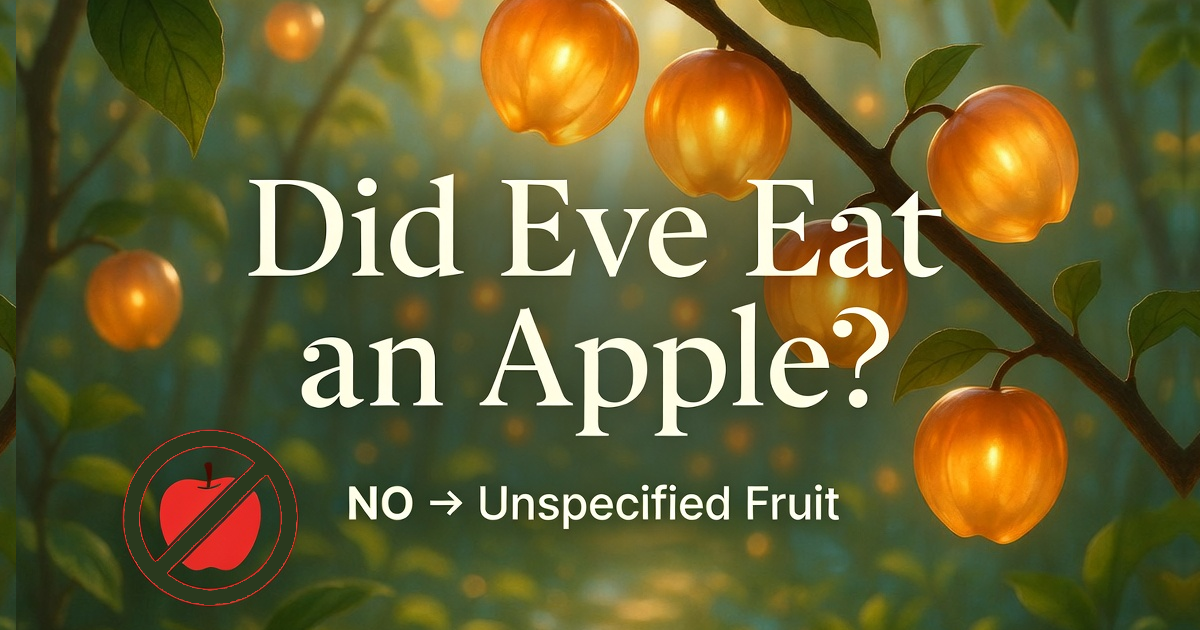
Myth 13: “Eve ate an apple.” → Unspecified fruit
One of the most persistent Bible myths is that Eve ate an apple in the Garden of Eden. You’ve seen it in paintings, cartoons, movies, and even the phrase “Adam’s apple.” But the Bible never says it was an apple. In this post we explore what Genesis actually says about the forbidden fruit, how the apple tradition began, and why getting this detail right deepens our understanding of Scripture.
What the Bible Actually Says About the Forbidden Fruit
The Book of Genesis is clear — and it never names the fruit:
“When the woman saw that the tree was good for food, and that it was a delight to the eyes, and that the tree was to be desired to make one wise, she took some of its fruit, and ate. Then she gave some to her husband with her, and he ate it, too.”
The Hebrew word used is peri (פְּרִי) — a generic term for any fruit. No mention of apple, fig, pomegranate, grape, or any specific variety. The emphasis is on disobedience to God’s command, not botany.
Genesis 2:16-17 (God’s command): “Yahweh God commanded the man, saying, ‘You may freely eat of every tree of the garden; but you shall not eat of the tree of the knowledge of good and evil; for in the day that you eat of it, you will surely die.’”
Genesis 3:6 (the act of eating)
How the “Eve Ate an Apple” Myth Started
The apple association developed centuries later through linguistic and cultural layers:
Latin Vulgate Influence (Latin translation of the Bible, 4th century): The word mali (from malum) could mean both “evil” and “apple,” creating a memorable pun.
Early Jewish and Christian interpreters suggested fig, pomegranate, or other fruits.
Medieval European art popularized the apple image, which then spread through Western culture, literature, and idioms.
Why This Myth Matters Today
This small misconception highlights a bigger issue: cultural traditions can obscure the Bible’s actual message. Correcting it encourages people to read Scripture on its own terms instead of dismissing it based on misunderstandings.
The real story is about humanity’s first rebellion: doubting God’s goodness, choosing autonomy over obedience, and the entrance of sin, death, and suffering into the world. It points forward to the need for a Savior — fulfilled in Jesus Christ, the “Second Adam” (Romans 5:12-21; 1 Corinthians 15:45).
Historical & Theological Insights
John MacArthur (Grace to You) teaches the Fall as a real historical event, with the focus on sin’s entry through disobedience, not the fruit itself.
The New Testament consistently treats Adam, Eve, and the Fall as literal (Romans 5, 1 Timothy 2, Revelation 12).
Conclusion
Getting the “small” details right — like the forbidden fruit — builds confidence in the bigger truths of Scripture. The Bible’s authority comes from what it actually says, not later artistic additions.
This is Myth 13 in my 21 Myths Series: Pop Culture & Everyday Myths (Myths 11–16).
Previous:
Myth 11 — Is Money the Root of All Evil?
Myth 12 — Was Jonah Swallowed by a Whale?
Reliable Voices on This Topic
Grace to You (gty.org) — John MacArthur’s expository sermons on Genesis 3.
Folsom Bible Church and similar Bible-teaching churches that emphasize careful exegesis.
Primary text: Genesis 2–3 in reliable translations (ESV, NIV, NASB).