Is Temptation Strongest When It Speaks or When It Simply Waits?
Sir Joseph Noël Paton’s 1874 painting Satan Watching the Sleep of Christ shows Jesus asleep after fasting in the wilderness. Satan sits nearby with a spear. He is not attacking. He is watching and waiting.
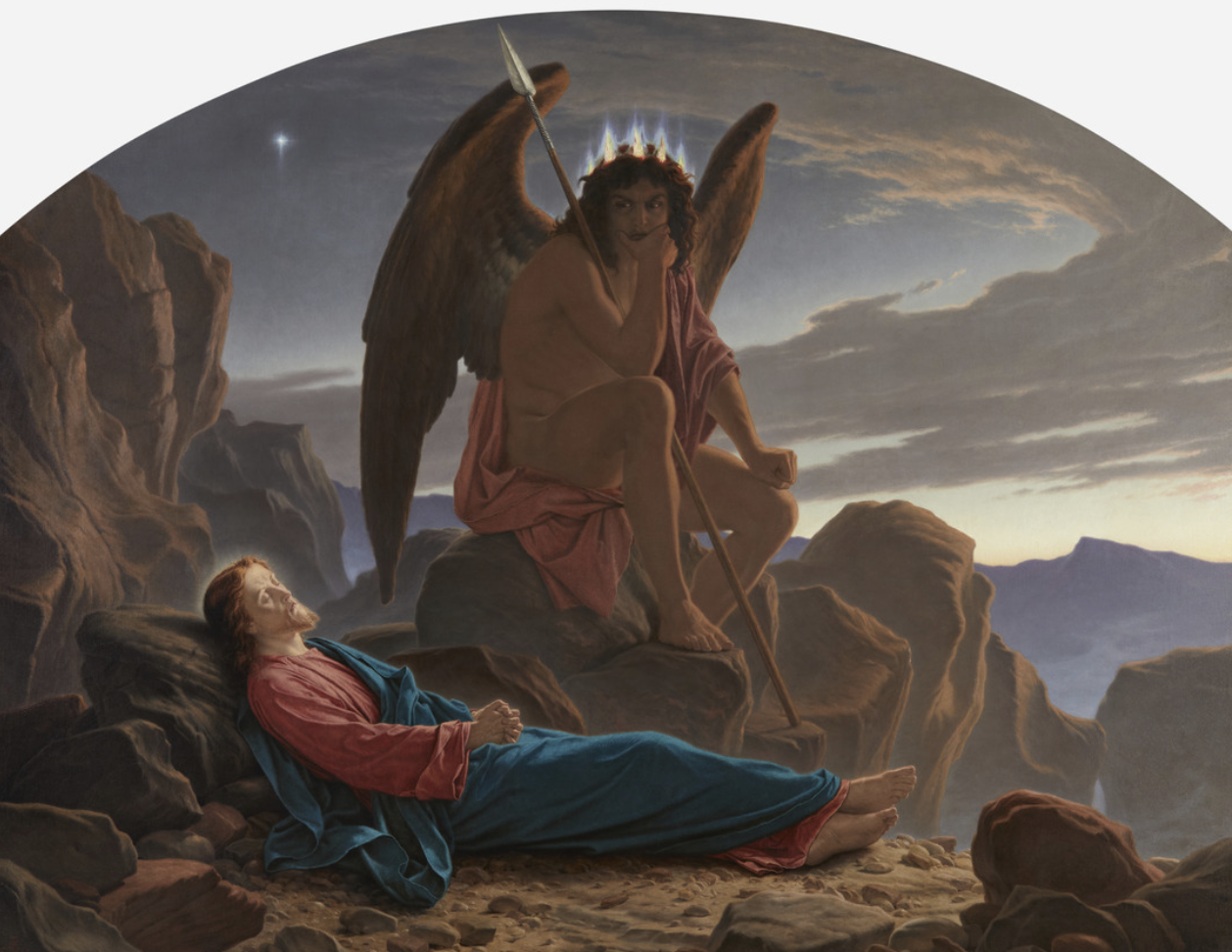
Sir Joseph Noël Paton, Satan Watching the Sleep of Christ
That raises a simple question: is temptation more dangerous when it is loud, or when it is quiet and patient?
The Bible describes both. The quiet kind is often harder to notice, and that is what makes it so dangerous.
The Biblical Picture of Temptation
Scripture portrays temptation as both aggressive and stealthy. The enemy “prowls around like a roaring lion, seeking someone to devour” (1 Peter 5:8), yet he also works through quiet persistence and clever subtlety.
In the Garden of Eden, the serpent did not shout commands but waited and whispered a deceptive question: “Has God really said…?” (Genesis 3:1). That patient probe opened the door to humanity’s fall.
Jesus faced direct temptations in the wilderness after 40 days of fasting — when He was physically vulnerable (Matthew 4:1-11). He later tells his disciples “Watch and pray, that you don’t enter into temptation. The spirit indeed is willing, but the flesh is weak.” (Matthew 26:41).
Temptation often strikes hardest when we are tired, distracted, or “sleeping” — spiritually, emotionally, or physically off guard.
James outlines the internal progression: “But each one is tempted when he is drawn away by his own lust and enticed. Then the lust, when it has conceived, bears sin. The sin, when it is full grown, brings forth death.” (James 1:14-15). Each person is tempted when he is lured and enticed by his own desire.
Desire does not usually become sin in one second. It sits. It grows. Then it takes over.
Martin Luther put it this way: you cannot stop birds from flying over your head, but you do not have to let them nest in your hair. Temptation will come. You do not have to give it a home.
Loud temptation is easier to spot. Quiet temptation blends into ordinary life. The waiting period allows desire to take root quietly until it overpowers us. That is why it often does more damage over time.
Three ways Satan gets in
In a 2021 talk on spiritual warfare, Charlie Kirk listed three common entry points:
Vows (or self-made “I will” promises)
Examples: “I’ll never do that again.” “I’m stronger than this.” “That’s not who I am anymore.”The problem is not wanting to change. The problem is trusting your own promise. Kirk pointed to Satan’s repeated “I will” statements in Isaiah 14. When you fail — and you will, if you rely on yourself — that vow becomes something Satan can use against you.
Jesus’ teaching is simpler… Let what you say be simply ‘Yes’ or ‘No’ (Matthew 5:37). Depend on Christ, not on a speech about how strong you are.
Your Environment
The people you spend time with, what you watch, what you listen to, and how you spend late hours all shape you. Jesus said if your eye causes you to sin, get rid of it (Matthew 5:29–30). He meant: remove what keeps pulling you toward sin.You become like what you live with. If your surroundings constantly feed temptation, “trying harder” will not be enough.
Sin you keep repeating and explaining away
Especially hidden sin. If you have already justified it, Satan does not need a new strategy. He can keep using the same door. The answer is repentance and confession, not another private plan.
These three things often look normal. That is why waiting temptation works so well. It does not need a crisis. It needs habits we refuse to question.
Why the Waiting Temptation Is So Dangerous
Loud temptation is easier to spot and reject. The patient kind slips in during:
Moments of exhaustion or spiritual “sleep”
Subtle cultural compromises
Lingering thoughts we allow to “nest”
Times of isolation from accountability
It observes vulnerability, then strikes with precision.
Practical Steps to Resist the Patient Enemy
Here are biblically grounded, practical strategies:
Watch and pray (Matthew 26:41) — Cultivate daily spiritual alertness through Scripture and prayer.
Know the enemy’s schemes — Study biblical warnings.
Flee when needed and endure — God always provides an escape (1 Corinthians 10:13).
Build accountable community — Intentional discipleship relationships expose hidden sin early.
Fix your eyes on Jesus — He overcame every temptation and offers victory (Hebrews 12:1-2).
Fill your mind with truth — Counter lies with God’s Word, just as Jesus did.
A Timeless Warning and Timely Hope
Satan in the painting does not need to strike yet. He is waiting for weakness: hunger, isolation, a small compromise that will not look serious at first.
Jesus is not panicked. He later answers every temptation with Scripture. The enemy can wait. He cannot win against those who stay with Christ.
So do not only watch for loud temptation. Temptation is often strongest not when it shouts, but when it sits there and we tell ourselves nothing is happening.