21 Myths Series: Myth 16 — Was Jesus Born in a Stable?
Pop Culture & Everyday Myths (Myths 11–16)
What the Bible Actually Says vs. What Culture Thinks
Myth 16: “Jesus was born in a stable/barn.” → The Bible mentions a feeding trough (first-century manger)
Every Christmas, nativity scenes and carols portray Jesus being born in a stable/barn surrounded by animals. But the Bible never says that.
What Luke Actually Records
“While they were there, the day had come for her to give birth. She gave birth to her firstborn son. She wrapped him in bands of cloth and laid him in a feeding trough, because there was no room for them in the inn.”
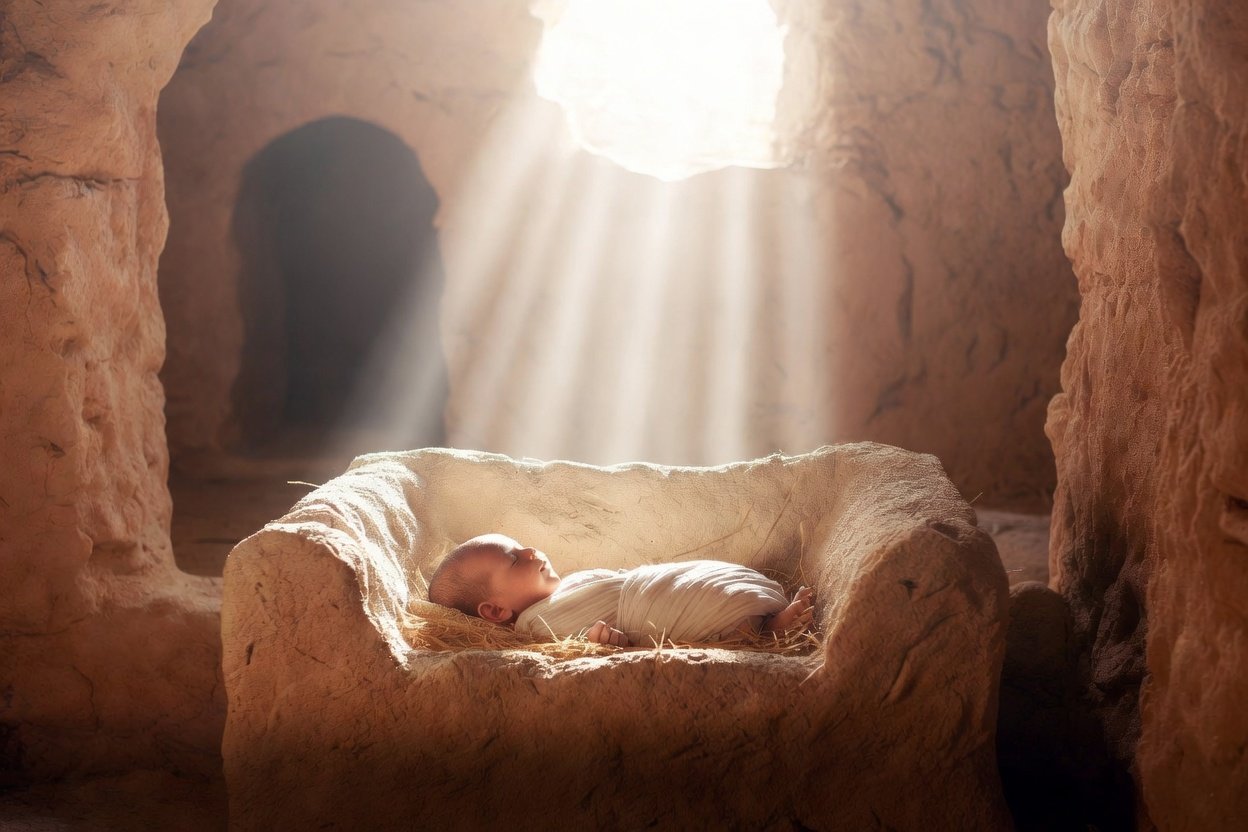
The Bible mentions a manger, but in first-century culture this had a very different meaning than we assume today. A manger was simply a feeding trough — usually carved from stone — located in the lower level or cave area of a family home where animals were kept at night.
The only details Luke gives us are a manger (Greek: phatnē — a feeding trough) and the fact there was no space for them in the kataluma (most accurately translated as “guest room” rather than a commercial inn — the same word used for the Upper Room in Luke 22:11).
The Bible does not mention a stable, a barn, an innkeeper, or animals present at the birth. Those familiar details were added by later Christian tradition and Western art.
Historical and Cultural Context of Jesus’ Birth
In first-century Judea, homes in the hill country around Bethlehem were typically simple structures with a main living area and a lower section — or an attached cave — where families brought animals inside at night for safety and warmth. Stone feeding troughs (mangers) were built into these spaces.
Joseph and Mary had traveled to Bethlehem for the census and most likely stayed with relatives. With the guest room (kataluma) already full, Mary gave birth in the main living area or the adjacent animal space/cave and laid Jesus in the feeding trough there.
Biblical scholar Wes Huff notes: “Jesus was most likely not born in what we picture as our modern day stables. The location probably resembled more of a cave or shelter built into a hillside… dotted with small caves that would have housed livestock.”
This explains why early Christian tradition (as early as the 2nd century) located the birth in a cave — the traditional site beneath the Church of the Nativity in Bethlehem is built over such a cave.
Animals (livestock) were likely nearby because of the manger and the cultural setting, but the scene was far more integrated into ordinary family life than the isolated, romantic stable of modern nativity scenes.
Why This Myth Matters Today
Correcting this common belief doesn’t reduce the wonder of Christmas — it actually enriches it:
True humility: Jesus entered the world in the ordinary, messy conditions of everyday peasant life.
God’s provision through hospitality: He was welcomed into the heart of a family home rather than completely rejected.
Scripture over tradition: Returning to the biblical text keeps us grounded and protects us from overly sentimental versions of the story.
Evangelistic credibility: Getting the details right helps us share the real Christmas story with greater confidence.
The true miracle is the eternal Son of God wrapped in cloths and laid in a feeding trough — the One who would become the Bread of Life for the world.
Conclusion
This myth, like the others in our 21 Myths Series, shows how culture layers traditions over time. Returning to the biblical text reveals a more grounded, awe-inspiring reality: The King of kings came humbly — exactly as needed — into the everyday mess of human life.
Jesus wasn’t born in a picturesque isolated stable. He was born in the heart of a family home, in vulnerability, to save His people from their sins. That truth makes the Christmas story even more powerful and relevant today.
Let this season move you from sentimental nativity scenes to deeper worship of Immanuel — God with us.
This is Myth 16 in my 21 Myths Series: Pop Culture & Everyday Myths (Myths 11–16).
Previous:
Myth 11 — Is Money the Root of All Evil?
Myth 12 — Was Jonah Swallowed by a Whale?
Myth 13 — Did Eve Eat an Apple?
Myth 14 — Does Satan Rule Hell With a Pitchfork?
Myth 15 — Do All Angles Have Wings?
Reliable Voices on This Topic
Primary: Luke 2:1-7 (and parallels); compare Greek terms kataluma and phatnē.
John MacArthur / gty.org: Sermons on Luke 2. Emphasizes the biblical text’s focus on the manger due to no room in the guest facility, with animals implied but not central.
Answers in Genesis (Tim Chaffey): Detailed cultural/archaeological analysis.
Wes Huff: Historical debunking of Christmas myths.
Lee Strobel: The Case for Christmas. In discussions of Christmas fact vs. fiction (e.g., The Case for Christmas), he addresses legends around the birth narrative while affirming the core historical events.
Ian Paul / Psephizo and similar biblical scholars: On kataluma and first-century housing.
Martin Luther’s Christmas sermons: Theological depth on the manger. Preached powerfully on the humility of the manger as the “first throne” for the King - lowly, with ox and sheep, yet the Creator entering human mess. He focused on theological wonder rather than debating architecture.